John O'Brien's thinking was instrumental in helping others to achieve real change.
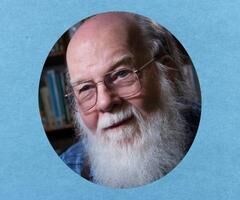
In 2025 we lost John O'Brien. Those who knew John knew him as wonderful friend and source of love and wisdom. Others will have been influenced by John, perhaps without even knowing. because John played a critical role in developing many of the most important innovations in policy and practice of our time.
For Citizen Network he was the primary source of inspiration for everything we have done over the past 16 years. John was also our first Fellow and he continued to support our work until the very end of his life.
To honour him and his contribution to creating a world where everyone matters we are publishing a series of articles that reveal different dimensions of his work.
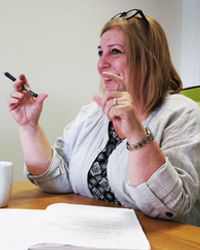
Author: Frances Brown
When I heard that John had passed I felt a terrible sense of loss that was shared across my friends and colleagues in Scotland. John’s work had set the North Star for us, helping us navigate to create real change for people living here in Scotland.
I have had a long career focused for over 46 years on de-institutionalisation, inclusion and social justice. I started as a Psychiatric Nurse, working in the very worst institutions where people were robbed of their lives. I was 20 years old and felt I had gone into a parallel universe not rooted in any kind of humanity, kindness, care or consideration. I committed myself to close these places down and de-institutionalisation has remained my life’s work.
I went on to train in General Nursing and achieved as master’s degree in Community Care from Glasgow University. I became a Clinical Nurse Specialist for Rehabilitation and my role was to actively help people escape from the institutions and to move to live in the community with support. However at this time psychiatry was dominated by the medical model.
I first came in contact with John’s work when I started working in the third sector alongside people with intellectual disabilities. Two experiences changed me as a person and gave me the strength I needed to make a significant and real difference to my own work, giving me the tools I needed to be part of the change.
Both of these experiences were centred on John’s teachings.
My first experience was in a PASSING workshop and service evaluation, a week-long retreat where we were immersed in the values of Normalisation and Social Role Valorisation. As part of this experience I spent time sitting in what was called a “training centre” which claimed to support people to learn and support them into work. I sat alongside a person in receipt of services, experiencing their reality for the first time all day—quietly watching and learning as they were segregated into a room alone, with the same song playing on the record player over and over again, abandoned and ignored for most of the day.
This tool clarified the role the service really played: not only failing to provide the service it said it offered but also creating a place where institutional neglect continued. A new community service could be just as institutional as the big institutional buildings where people used to live.
I cried at the end of this retreat and could think of nothing else when I returned home. I felt fundamentally changed and inspired to make real change. In that process I was alongside others and that was part of what worked: learning, discussing, sharing and supporting each other.
I worry post-COVID we have forgotten the benefit of being together when we learn, sharing experience and forging alliances for change and planning for the future. Learning, processing, disagreeing, understanding, sharing experiences of our own humanity is what helps us understand how we can do our best work.
My second critical experience was when I joined the person-centred planning consortium hosted by Scottish Human Services. We learned about MAP and PATH and other person-centred tools; we spent time hearing about the work of John O’Brien and other amazing people who had developed these approaches; we learned about facilitation and graphic facilitation, and we did this together over several years.
Eventually we came to understand that this was more than a skill, it was a total approach which meant supporting each individual, one person at a time, supporting them and those that loved them, to create solutions that really worked.
Institutionalisation was not about a place, a building or how many people were forced to live together or receive a service together, it was a whole systemic approach and mindset that often followed people from the big institutions into the smaller community services and group homes. Positive language often disguised the true reality.
We learned to move away from service solutions to ordinary community solutions. If someone has their own home in an ordinary street, then they are more likely to be included and be part of their community. They can share their gifts and create opportunities for people to see them in valued roles. They become a tenant, or a homeowner, a neighbour, someone’s family member taking up their roles as daughter, sister, brother. Pushing boundaries further and becoming someone’s partner, lover or mum and dad, a colleague, a church member and so on.
One person at a time lets us develop the right relationships when we are supporting people, relationships that are based on trust. Many people were very traumatised and damaged by their life experiences and acknowledging this was also essential. One person at a time means the person can be heard without having to compete for help. One person at a time means we can understand better how people are feeling and what they are experiencing because we are only paying attention to them.
I started to take the learning back to my organisation and tried to share this fundamental change in approach. Needless to say this was not easy; as I pushed the organisation pushed back. But I did manage to set up the first individualised support service for someone leaving Lennox Castle Hospital. In 1996 my life changed again as I began work with Simon Duffy to establish the groundbreaking Inclusion Glasgow.
This organisation was set up to help and support people to leave Lennox Castle Hospital and it was designed around all of the principles learned from John O’Brien.
We used person centred planning tools, focused on connection and community, respecting each persons right to be supported to live a meaningful life, with the same rights as any other citizen. Inclusion Glasgow’s work made a significant impact in Scotland and led to many similar organisations being developed. Ultimately these changes led to the legislation that governs social care in Scotland, the Self-Directed Support Act 2013.
Today I continue this mission, working in partnership with my friend John Dalrymple. We set up Radical Visions, not because we have any new radical visions to share, but because we recognise the constant danger of re-institutionalisation, of the system rebooting itself and forgetting what we know and what we have learned together. Ignoring the progress and our own history here in Scotland. Forgetting what has been learned and achieved when we closed the institutions and showed that it is not only possible to support people, one person at a time to move away from institutional, segregated and risk-averse service responses, towards supporting people in a way that works for them, in the real world, towards active citizenship with all the rights and responsibilities that come with that.
Eventually I did get the chance to meet John when he was in Scotland to facilitate events and share his wisdom. His presence was the thing that was so impressive, his quiet calmness and his ability to absorb what was taking place in the room and offer insights and reflections with such wisdom. He seemed to manage to do all this and make such an impact without ego, quietly without judgement, strongly and impressively. I left those events feeling so privileged to have had the chance to hear him speak to be in the room with him and to eventually have him know who I was and so be complementary about some of the work we were doing here in Scotland.
The highlight for me was that he messaged me after I had made a video about the work of Inclusion Glasgow, and he said it was the most consistent explanation of individual support and person-centred working that he had heard! Well that meant so much that THE “John O’Brien” had sent me such a message!
I hope he knew that his work continued to be at the heart of mine and everything I have continued to do with John, Simon and other friends and allies.
I would love to say we can now rest, but we can’t stop! John’s work continues to offer us the North Star that we must work towards. My fear is that his work is not being shared now.
We need to support the next generation of people who will lead the fight for change and ensure they get the chance to have these Eureka moments of learning and leadership during their careers, sharing John’s amazing work and the work of his colleagues is at the heart of this.
You can also read more about John O'Brien and his work here.
The publisher is Citizen Network. On the Shoulders of Giants © Frances Brown 2026.
Inclusion, intellectual disabilities, Canada, England, Europe, Global, Northern Ireland, Scotland, USA, Wales, Article