John O'Brien did not just offer a vision of inclusion he also helped build the bridge towards it.
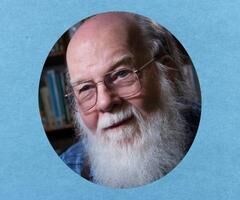
In 2025 we lost John O'Brien. Those who knew John knew him as wonderful friend and source of love and wisdom. Others will have been influenced by John, perhaps without even knowing. because John played a critical role in developing many of the most important innovations in policy and practice of our time.
For Citizen Network he was the primary source of inspiration for everything we have done over the past 16 years. John was also our first Fellow and he continued to support our work until the very end of his life.
To honour him and his contribution to creating a world where everyone matters we are publishing a series of articles that reveal different dimensions of his work.
Author: Simon Duffy
My work with people with learning disabilities started in 1990, when I arrived at Southwark Consortium. This was one of the pioneering organisations, created by Nan Carle and her colleagues, to provide support and housing to people returning to South East London as Darenth Park Hospital and other large-scale institutions were closed. I arrived when the foundational work had been completed; but there were big questions about what should come next.
After visiting an institution as a NHS General Management Trainee I was keen to help, but I arrived at Southwark Consortium with no professional training (other than a degree in Philosophy and Politics). I had a lot to learn and I attended meetings and trainings, read books and talked to colleagues. I learned about the history of institutionalisation and the principles of Social Role Valorisation (SRV). It was clear that SRV was a powerful tool that reveals the forces that reinforce prejudices against people with learning disabilities and sustain institutional practices. Exclusion generates exclusion.
However I had questions. It was not clear to me that a socially valuable role is the same as a socially valued role. Not all societies are equal and in our society we often value things we shouldn’t, like celebrity, money and power. Some societies value even worse things: racial purity, violence or obedience. Living out of harmony with a society’s values involves risk but it is not necessarily wrong. In fact erasing or disguising differences is not the same as respecting difference, and it brings different risks. Sometimes it seemed to me the values of SRV were even being imposed on people and against their wishes or interests. Certainly one of the features of the services developed in the wake of the closure of the big institutions was that they often seemed to be still quite institutional—controlling and isolating—more like a ghetto within the community than truly part of the community.
I wanted to better understand, not just the evil we’d done to people, but the good that we were trying to create. It was at the point in my life that I heard John’s voice. Listening to John changed my life and my understanding.
I heard John before I ever saw John. Steven Rose, my boss at Southwark Consortium lent me a tape of a speech that John had given to the Royal College of Nurses (RCN). I played this tape again and again on my commute from Streatham to Southwark. John’s voice was very special—it wound like a mighty river, drawing in all sorts of wisdom—ideas, stories, quotes, principles and understandings drawn from many different traditions. The destination of this river was inclusion—the creation of communities where everyone is welcome, where everyone can flourish and everyone feels themselves to be valued as an equal—as a citizen.
The idea of inclusion is the idea that leapt out to me and seized my heart—as it does today. What struck me was that none of the philosophical theories that had dominated my education had grappled with how important it is to create communities where everyone, with all their differences, is welcomed cherished and supported. The goals of all the major political theories (Marxism, utilitarianism, liberalism or conservatism) seemed far less realistic and less attractive than the ideal of inclusion. What is more, unlike SRV, this was not a special theory, just for people who face exclusion, this was a vision that works for everyone. We all need inclusion, we all need to be loved and valued, we all need to give, to receive and to contribute in our own unique way.
What makes this even more exciting as a vision of society is that it dignifies our shared work as citizens in creating and sustaining these communities. We are not cogs in some system, we are unique and special beings, each with our own value and destiny. Of course, like any true ethical theory, there is a mystery at the heart of this vision. We cannot prove that our lives have meaning, that we each enter the world as a gift to the world, a gift that can be both recognised or ignored. There is a metaphysical or spiritual dimension to inclusion. It asks us to think more deeply, to look for possibility and to expect opportunities. What we see on the surface of things may not reflect reality.
John did not just envision the bridge to inclusion, he helped build the bridge. In particular, he played a critical role in defining and designing many of the social innovations that have been critical to better organising support to help everyone live a life of citizenship: supported living, inclusive education, supported employment, community connecting, personalised support, person-centred planning, self-direction and advocacy. For example, when Peter Kinsella created the Supported Living programme, to help people access full housing rights, it was John’s paper Down stairs that are never your own that helped us define our goals. When we began to learn about Person Centred Planning it was Finding a way towards everyday lives - the contribution of person-centred planning that set us on the right course.
Often he teamed up with other practitioners to help them advance their thinking and give their work a new clarity. I cannot speak for his other co-authors, but not only was he a joy to work with, often doing the real heavy-lifting, but he was always intellectually generous. For example, when I was writing about the economic value of self-directed support he referred me to a new economic model, Pull Economics, that perfectly explained its efficiency. John was always sending you useful things to read that connected to the challenges you faced.
Many have turned John’s ideas into business opportunities, but John’s approach was very different. He never put himself at the centre; he always remembered the real challenge. For instance, in 1994 John agreed to come and speak at Southwark Consortium’s Innovations Conference. I was excited that my hero had agreed to come to Southwark and part of me certainly wanted to show-off all the ‘great innovations’ we’d been working on. But when John took the stage one phrase jumped out and hit me in the stomach like a sledgehammer:
“People and families are the true innovators.”
At first this hit my pride, but on reflection I realised how profoundly true this was. Whatever systemic or structural innovation we might develop the true test of the innovation’s value is whether it helps people to change their own lives for the better—the critical innovation, the central act of creativity, is the work that the disabled person or their family has to do to build a life of citizenship in a world that is often hostile or uncomprehending.
John always respected this truth in his work. John dedicated his life to learning from everyone who was trying to do the work of inclusion and sharing descriptions of that work that then became the building blocks that helped us to do this work together. He listened, facilitated discussions, wrote beautiful papers and gave inspiring talks. He freely gave us the tools we needed.
John was also an activist, who had a profound understanding of the challenge of trying to achieve the changes we need to make. Although John was not quick to anger or express strong political opinions, I think it is telling that he was often most animated by the thoughtless destruction of what others had spent years building. He didn’t write many pieces that focused on what was wrong with the system, but one paper that stands out is Surviving Cogworld. This is an analysis of the threats to decades of progressive work in Wisconsin by the imposition of a commercial, bureaucratic and unaccountable system of managed care.
I also remember a comment when I expressed amazement to him about the maddening complexity of the US funding system. John gently put me in my place by pointing out that stable complexity is much better than ongoing chaos. The constant redesign of the UK’s health and social care system by central government makes progress much harder than bureaucratic complexity.
Increasingly his work focused on how we can better understand the process of change itself. He drew attention to the work of Otto Scharmer and Theory U, an approach that seeks to reconcile progressive change with the need for patience and moments of uncertainty. His recent paper with Patti Scott, Leadership in Complexity, draws attention to the work of David Snowdon and the Cynefin framework—that demonstrates the need for a different quality of thinking and problem-solving in person-centred work. John has also been a close ally of Ester Ortega, whose development of Airea and La Regadera in Spain, puts these ideas into practice.
Personally I must say what an amazing friend and ally John has been to me. I knew him for nearly 35 years and throughout that time he gave constant, but quiet encouragement. In 2009, when I took my courage in my hands and established the Centre for Welfare Reform (now Citizen Network) to act as a think tank for inclusion and citizenship John was the first person who agreed to become a Fellow. The day John agreed to become a Fellow was one of the happiest in my life.
John’s impact has been immeasurable. The challenge now is to ensure his legacy is protected by the work we choose to commit ourselves to in the future and by the spirit of ongoing curiosity and humility we must embrace if we are to do this work well.
O'Brien J (1991) Down stairs that are never your own. Lithonia, GA: Responsive Systems Associates.
O’Brien J (2015) Surviving Cogworld. Madison: Developmental Disabilities Network.
O'Brien J & Lovett H (1992) Finding a way towards everyday lives - the contribution of person-centred planning. Lithonia, GA: Responsive Systems Associates.
Scott P & O’Brien J (2025) Leadership in Complexity: An appreciation of Cynefin.
You can also read more about John O'Brien and his work here.
The publisher is Citizen Network. In Memory of John © Simon Duffy 2025.
Deinstitutionalisation, Inclusion, intellectual disabilities, Need for Roots, Person-Centred Planning, Personalised Support, Self-Directed Support, social justice, Canada, England, Europe, Global, Northern Ireland, Scotland, USA, Wales, Article