John O'Brien described what good looked like, in a simple and straightforward format that inspired others.
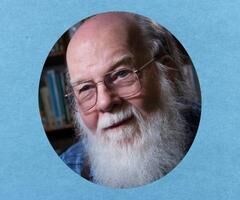
In 2025 we lost John O'Brien. Those who knew John knew him as wonderful friend and source of love and wisdom. Others will have been influenced by John, perhaps without even knowing. because John played a critical role in developing many of the most important innovations in policy and practice of our time.
For Citizen Network he was the primary source of inspiration for everything we have done over the past 16 years. John was also our first Fellow and he continued to support our work until the very end of his life.
To honour him and his contribution to creating a world where everyone matters we are publishing a series of articles that reveal different dimensions of his work.
Author Steven Rose
Illustrations by Jody Middleton
John was my guiding light and source of inspiration for almost four decades. I spent the first 17 years of my career, starting in 1974, as a learning disability nurse working mainly in NHS institutions, but most of my career has been spent in the charitable sector. Over two decades of that time was spent closing those NHS institutions where I began working all those years ago.
I first came across John’s work when I was a Director of Nursing managing a semi-community-based NHS Learning Disability service, in north Hampshire. John and Connie Lyle O’Brien had published their Framework for Accomplishment in 1987, and I first read the Framework round about this time. The five accomplishments are set out clearly in the second article in this series by Nan Carle (see link below).
At this time, whilst a few smaller NHS institutions had closed, most remained open although children were no longer being admitted to these institutions. One of the first of the large NHS institutions in England to close, Darenth Park, in Kent, wouldn’t close until 1988. Southwark Consortium (later to become Choice Support), the organisation I was destined to join as CEO three years later played a significant role in the closure of Darenth Park Hospital. By then, we had pretty much worked out what bad looked like as the hospital closure programme was underway, although no one realised that it was going to take more than two more decades to complete. However, we had not really defined what good looked like.
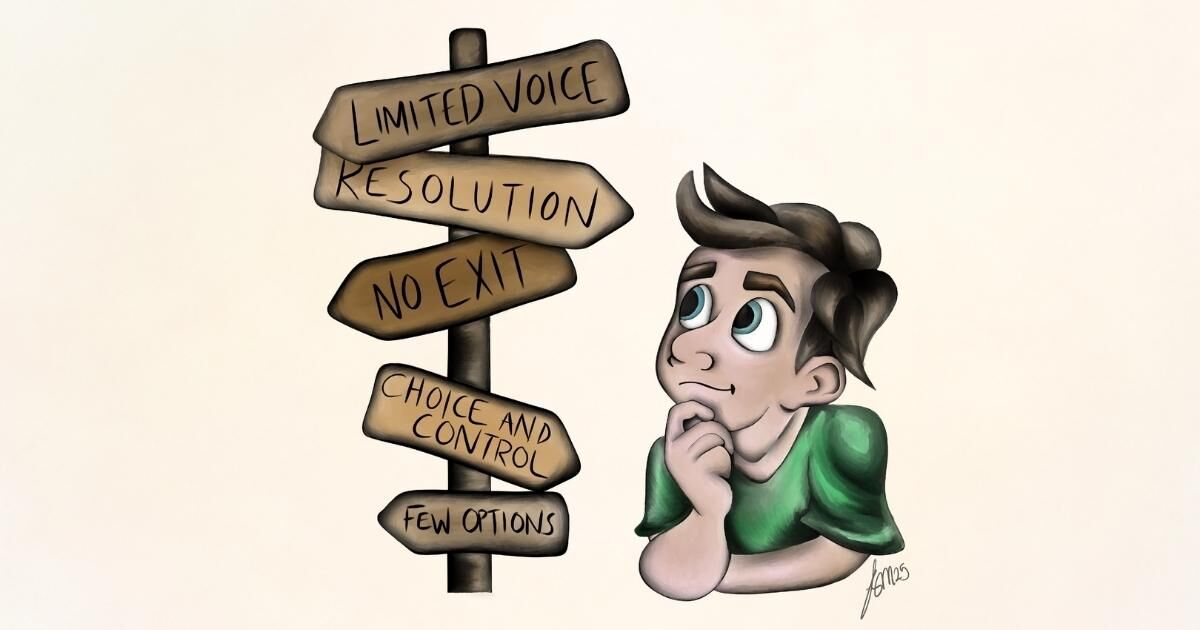
Illustration: People making their own choices
Much of the thinking at the time tended to be building focused rather than people focused i.e. large institutions in isolated settings were bad, whilst small ordinary houses in local communities were good.

Illustration: Developing through relationships
For me as a young leader who wanted to make things better for people the Framework for Accomplishment finally described what good looked like, in a simple straightforward format that I could use to inspire others and measure against to see how well we were doing. Those of us leading the closure of institutions knew that we had to make things much better, but there were differing views of where we were going and how to get there. The Framework for Accomplishment completed our incomplete vision and provided cohesion and direction; it became our operational manual.
By the early 1990s O’Brien’s 5 Accomplishments had become a byword for quality.
Anyone attending an interview for a manager’s job supporting people with learning disabilities could expect to be asked to recite the 5 Accomplishments. In Lewisham and North Southwark Health Authority there was even a band of managers who were musicians who called themselves the 5 Accomplishments.
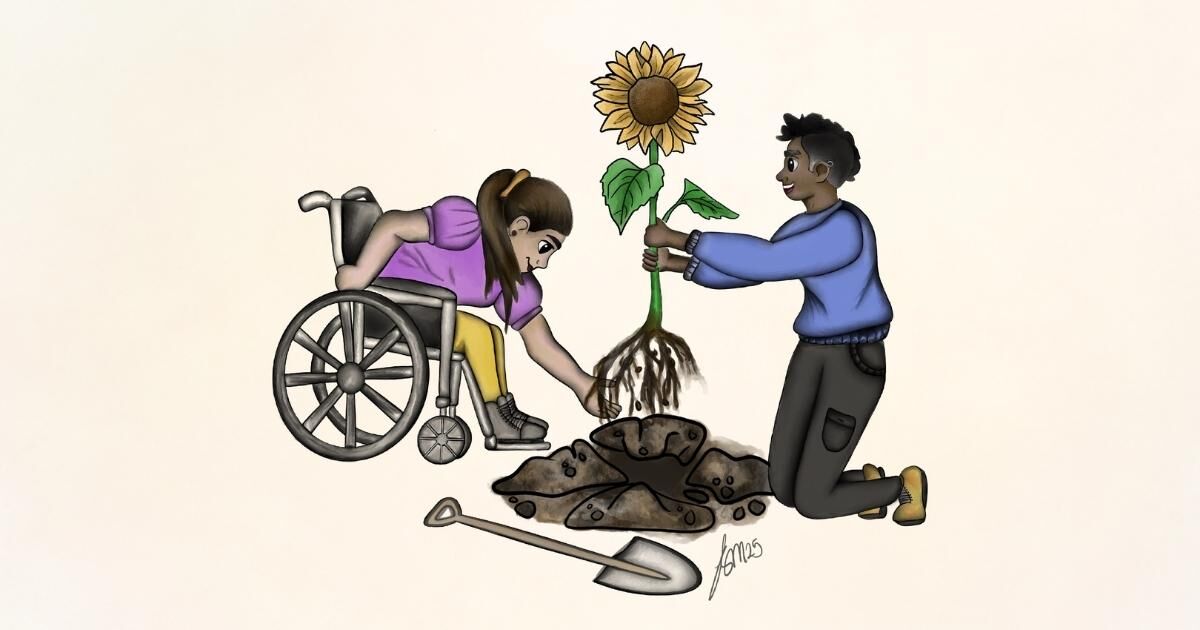
Illustration: Contributing to community
I first met John in March 1989 in Nottingham. I can’t recall the exact date, but I do remember that it was Beaujolais Noveau Day! In those days the Royal College of Nursing held an annual learning disability nursing conference. I noticed that John was speaking at the conference. Without hesitation I hired a minibus so that my whole management team could be transported from Hampshire to Nottingham to hear John’s wisdom.
The Framework for Accomplishment was just beginning to take off in parts of the UK in the same way that PASS and PASSING workshops had a few years before. When John spoke at the conference, he cautioned against trying to baptise a crowd with a hosepipe. I think that he was concerned that the Framework for Accomplishment was getting too popular too quickly and that there was a danger of misinterpretation or misapplication. He was emphasising the need, just as with person centred planning, to work on implementing with one person at a time.
There were about 200 learning disability nurses at the conference, and I believe that day John succeeded in inspiring every one of us.
When the conference ended, we queued up to meet and speak to John. Eventually, we had to depart and embark on the long drive in the dark back to Hampshire. The journey passed quickly as we were engaged in animated conversation about John’s inspiring words, all well-oiled by several bottles of Beaujolais Noveau; not the driver of course!
I joined Southwark Consortium (later to become Choice Support) as its CEO in 1991. Southwark Consortium had been formed, in 1984, by a visionary group of leaders, including Nan Carle and Ritchard Brazil. The aim was to bring together statutory organisations, voluntary organisations and housing associations to work in partnership, on the closure of Darenth Park Hospital, in Kent. Within a couple of years of my appointment Choice Support’s tenth anniversary was looming. Little did I know at the time that I would also be organising Choice Support’s twentieth and thirtieth anniversaries as CEO and be invited back as an ex-Ceo to speak at the fortieth anniversary celebration.
As well as playing a role in the closure of Darenth Park, Choice Support had participated as a recipient, in 1992, in the first large scale transfer of NHS learning disability support to the charitable sector; something that we would repeat time and time again over the coming two decades. We were proud of our achievements, and we wanted to use the occasion of our tenth anniversary to showcase our work. We planned an ambitious two-day conference in south London. As well as managing to assemble an impressive array of prominent speakers we had a range of local mangers and practitioners presenting their work in workshops.
As the plans for the event started to come together I decided to ask John to speak at the event, to my astonishment he agreed. Over 250 people attended and I know John’s presence would have influenced the large numbers.
My career working with people with learning disabilities and autistic people now spans more than five decades. John’s wisdom has inspired and driven me for most of this time and continues to do so. Looking back over the last half a century there have been leaders, influencers, academics, thinkers and game changers including people with learning disabilities who have made significant impacts helping get people with learning disabilities better lives. But none so impactful and enduring as John, his humanity, wisdom, ability to communicate and humbleness influenced a whole generation and made life better for tens of thousands of people.
You can also read more about John O'Brien and his work here.
The publisher is Citizen Network. Driven by Accomplishment © Steven Rose 2026.
Deinstitutionalisation, Inclusion, intellectual disabilities, Canada, England, Europe, Global, USA, Article