John O'Brien was instrumental in bringing the idea of self-advocacy into people's lives.

In 2025 we lost John O'Brien. Those who knew John knew him as wonderful friend and source of love and wisdom. Others will have been influenced by John, perhaps without even knowing. because John played a critical role in developing many of the most important innovations in policy and practice of our time.
For Citizen Network he was the primary source of inspiration for everything we have done over the past 16 years. John was also our first Fellow and he continued to support our work until the very end of his life.
To honour him and his contribution to creating a world where everyone matters we are publishing a series of articles that reveal different dimensions of his work.
Author: Gary Bourlet
Looking back over forty years of self-advocacy work, there are a few moments that truly changed the direction of my life. One of the most important was in 1984, when I travelled with John Hersov and other self-advocates from the UK to a big conference in Seattle. We had help from Mencap and the King’s Fund to make the journey, and even though we didn’t fully know what we were getting into, I had a feeling it would matter. I just didn’t know how much. That trip opened my eyes, set me on a path I’m still following today, and introduced me to people who shaped both my life and the self-advocacy movement in this country. One of those people being John O’Brien.
The Seattle conference was unlike anything I had seen before.
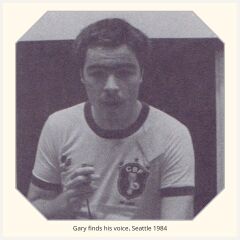
It was one of the first big gatherings focused on self-advocacy. John O’Brien was one of the presenters at the conference, and I remember watching him on stage as clearly as if it were yesterday. His presentation was called “What hurts, What Helps” and he encouraged self-advocates from the United States to speak openly and emotionally about their lives in long-stay institutions. Hearing those personal stories directly, without them being filtered or interpreted by professionals, was powerful. People cried and recognised their own experiences in what others said. For many of us, it was the first time we had been in a space where these truths were spoken so honestly and taken so seriously.
The way John encouraged people to speak for themselves made a big impression on me. He didn’t lecture; he created the conditions for people to open up. I remember thinking that it felt like something you would see on television, because the atmosphere was so charged and so alive. He got people thinking, interacting, and connecting with one another in a way I had never seen before. I learned so much in that moment about the importance of listening and giving people space.
The American self-advocates who spoke that week were so honest about what they had lived through. Their courage made me think: if they could start something powerful in their country, why couldn’t we do the same in England?
When I came home from Seattle, I felt completely determined to get something going here. I knew that if people in the UK could hear the same kinds of stories I’d heard, real people talking about real experiences - it could spark a movement. So, I sat down and wrote 400 letters by hand. Every single one. I contacted people all over the country, inviting them to get involved. That was the beginning of the self-advocacy movement here. We didn’t have email or social media; we had determination, pens, paper, and belief in self-determination. And bit by bit, things began to happen.
I could feel that something important was starting.
Something else I want to touch on was the huge part John O’Brien played in introducing person-centred planning to the UK. The whole belief that people with learning disabilities should be at the centre of decisions about their own lives, well that wasn’t always taken for granted. John helped us understand that planning should begin with the person, their hopes, their strengths, their direction. Over the years, I’ve been in plenty of discussions about person-centred planning, with everyone agreeing it is the way of working we should all strive towards. It began shaping government thinking in “Valuing People” and has become an integral part of how support works in this country. I have such a positive personal experience with person-centred planning too, it helped me to see what I could achieve – my north star. It was John’s influence that helped set this way of working in motion. It was revolutionary.
One of the things I liked most about John was the way he worked with groups.
He was an incredible listener, he really listened, he didn’t pretend to and had a unique way of helping people understand each other. If you’ve ever seen him stand on stage with five coloured pens in one hand, turning a complicated group discussion into clear, beautiful graphics, you’ll know what I mean. He took all the thoughts, hopes, and worries people share and brought them together on the page in a way that made everything clearer. It meant that everyone, including people who find words difficult, could see their contributions included and valued. His graphic facilitation has helped us work through big problems and understand ideas that would otherwise have been lost. Even now, not many people can do this well, certainly not with the skill and creativity he had. I often think that all his graphic work deserves to be displayed somewhere as part of our history.
Over the years, John kept coming to the UK, and I took part in many of the events where he was speaking or facilitating. He was inspiring, approachable and kind. People often say you need role models in your career, and he is definitely one of mine. But I think he also learned a lot from the people with learning disabilities who worked with him. It has gone both ways. To this day, I’m still in touch with self-advocates from the UK and from around the world who were also in Seattle in 1984. I’m also still in touch with Connie Lyle O'Brien, who I met in Seattle, John's wonderful wife and an equally brilliant thinker. Those relationships matter.
John hasn’t just inspired me, he has inspired so many others too. He will be a hard act to follow, but that doesn’t mean we shouldn’t try.
He sets an example of how to listen, how to work with people, and how to believe that everyone has something important to say.
I don’t think there will ever be another person quite like him, but his influence will always live on in the work we do and in the movement he has helped to nurture. I am grateful for everything I learned from him, and for how much he helped all of us to see what is possible.
If we are serious about building a future where people with learning disabilities can speak for themselves, control their own lives, and be valued as full citizens, then we have to hold on to the lessons he has taught us. We need spaces where people are truly listened to, where their stories matter, where self-determination isn’t just a slogan but something real. We need more people willing to step forward, take risks, and support each other. The movement isn’t finished, there is still so much to do. But the journey I started in 1984, and the things I learned from John O’Brien along the way, give me hope that we can keep moving forward.
You can also read more about John O'Brien and his work here.
The publisher is Citizen Network. Finding Self-Advocacy © Gary Bourlet 2026.
Deinstitutionalisation, Inclusion, intellectual disabilities, Canada, England, Europe, Global, Northern Ireland, Scotland, USA, Wales, Article