Exploring how to grow neighbourhoods to be places where we take care of ourselves, each other and the planet.
News | 14.07.26
Welcome to the Neighbourhoods of Care newsletter from Citizen Network. This is where we explore how to grow neighbourhoods to be places where we take care of ourselves, each other and the planet.
Since 2019 Citizen Network has been working to show that things will be better for everyone if we can help citizens have more power and we can support every neighbourhood and every village to become a caring community. In 2020 in the COVID pandemic we saw two important things:
It should not take a pandemic to make us realise that people need support in their own homes and in their own neighbourhoods. It should not take a pandemic to remember that we all need each other and a connected and supportive community is a joyful and sustainable community. But we did not ‘build back better’ we went back to the old ways of working and living. Despite this many folk around the world have been working on a number of fronts to try and shift things.
As many people are starting to recognise, England is the most centralised country in the world. This centralisation has more than one dimension. Certainly too much power sits in Whitehall and Westminster, but the same is true at a local government level. In most of England there are no decision-making structures that sit inside or are even close to neighbourhoods. For example, in Sheffield, a large City of 600,000 people, there is no official map showing the neighbourhoods. However in 2022, with support from Emma Latimer, head of NHS Sheffield, we got a little bit of money and, working with Tom French, we successfully mapped the 147 neighbourhoods of Sheffield.
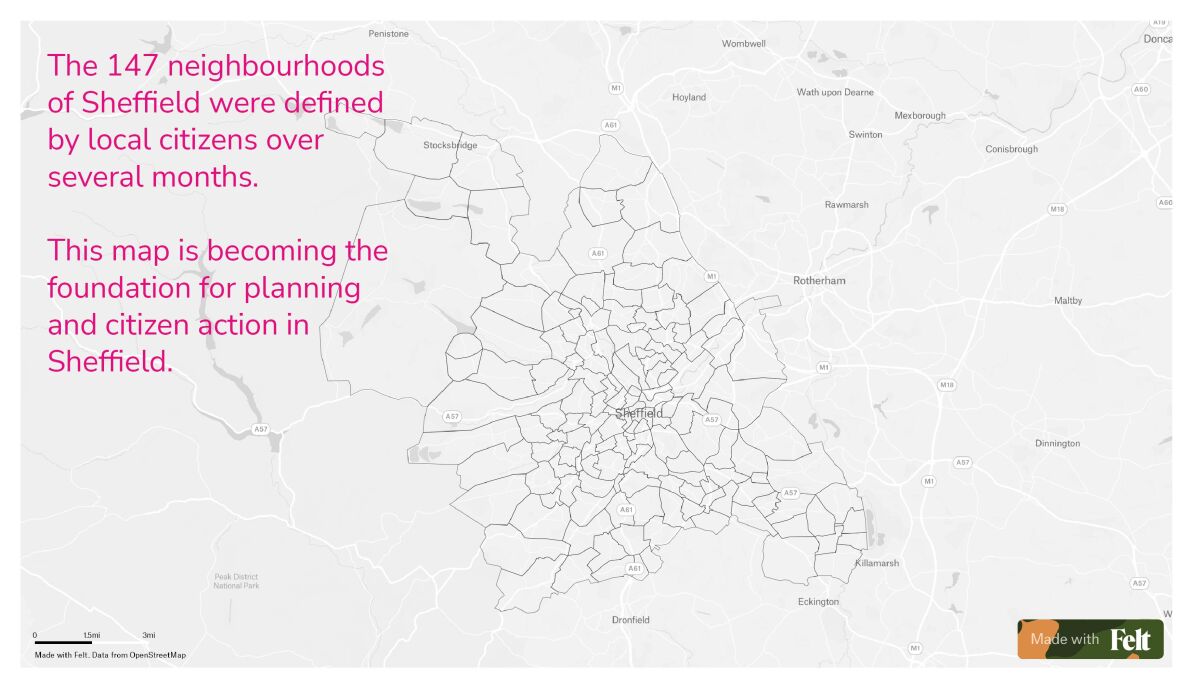
We are now beginning to build a dynamic map to support more neighbourhoods. If you want to explore the current version of this map for South Yorkshire you can find it here.
Over time leaders across the City have come to accept this citizen-generated map as an essential framework for the development of the City. Today the Sheffield City Goals project is committed to ensuring that each neighbourhood develops resources and governance in order to make their own decisions. Brian Mosley has also built the 147 neighbourhoods into an exciting digital initiative, Seven Hills, which aims to connect citizens without the toxicity of current social media systems.
Jason Leman is leading Citizen Network’s efforts to drive forward the conversation on true local governance both in Sheffield and nationally. If you are interested in these ideas please join the Neighbourhood Democracy mailing list.
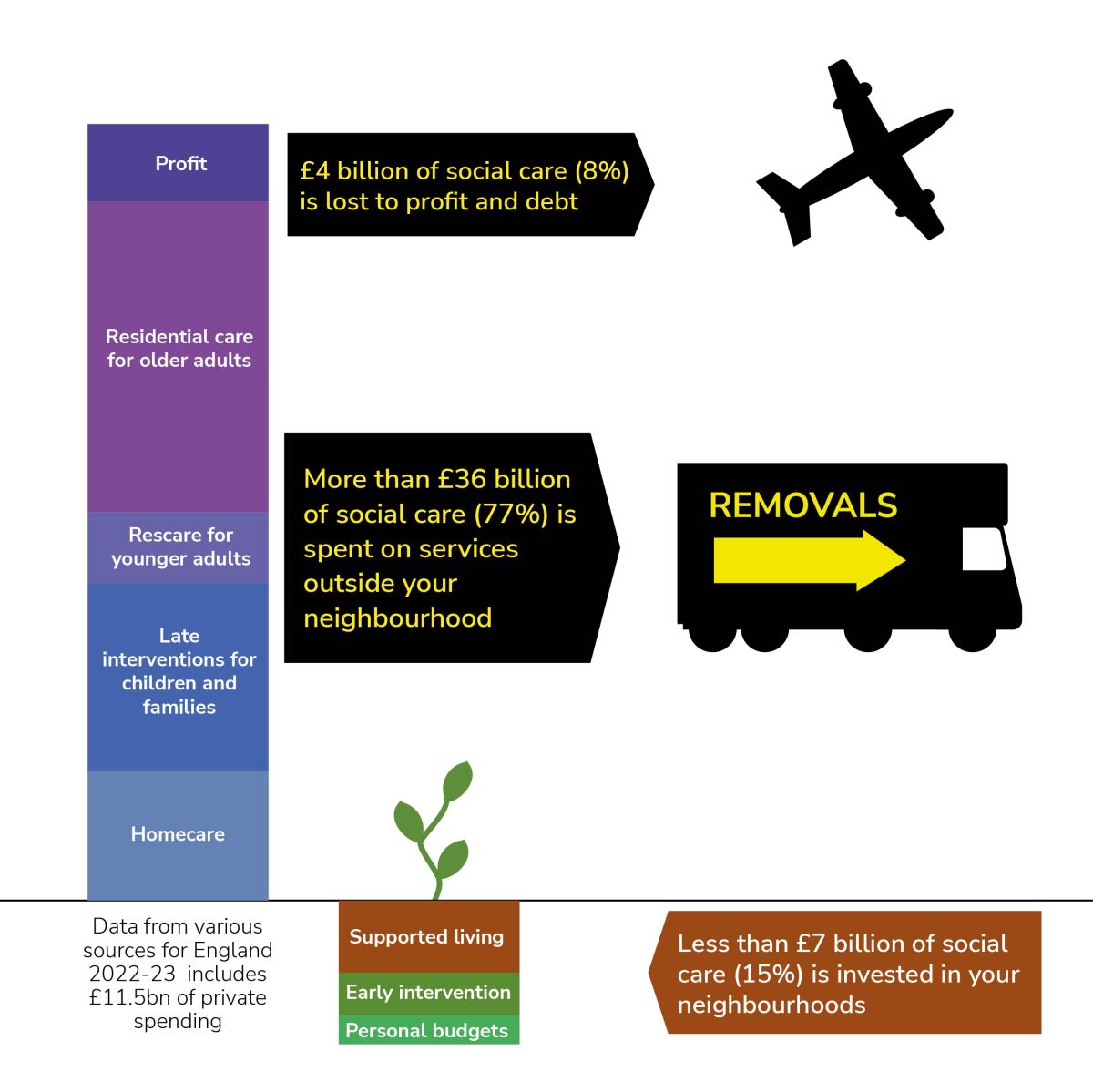
Care is the biggest thing that local government does and together with NHS spending is about £250 billion in England. Together that’s about £4,500 per person or about £23 million for a neighbourhood of 5,000 people. However very little of that money gets spent in or through local neighbourhoods. Just looking at social care spending in England (children and adults together) we can see that most of this money is extracted from the neighbourhood:
In South Yorkshire we met with senior managers in the care system and many community leaders to develop our Neighbourhoods of Care Strategy. This sets out the case for radical, long-term change and outlines a strategy which South Yorkshire could follow, with the 4 cities of South Yorkshire collaborating with the NHS and the Mayor to put South Yorkshire at the heart of what is already an emerging global trend. So far both Doncaster and Sheffield have made a commitment to begin working on this with us. In addition the NHS, along with the City and the voluntary sector agreed to put real neighbourhoods (at the size recognised by citizens) at the heart of their local strategy and they agreed to 17 design principles for radical change.
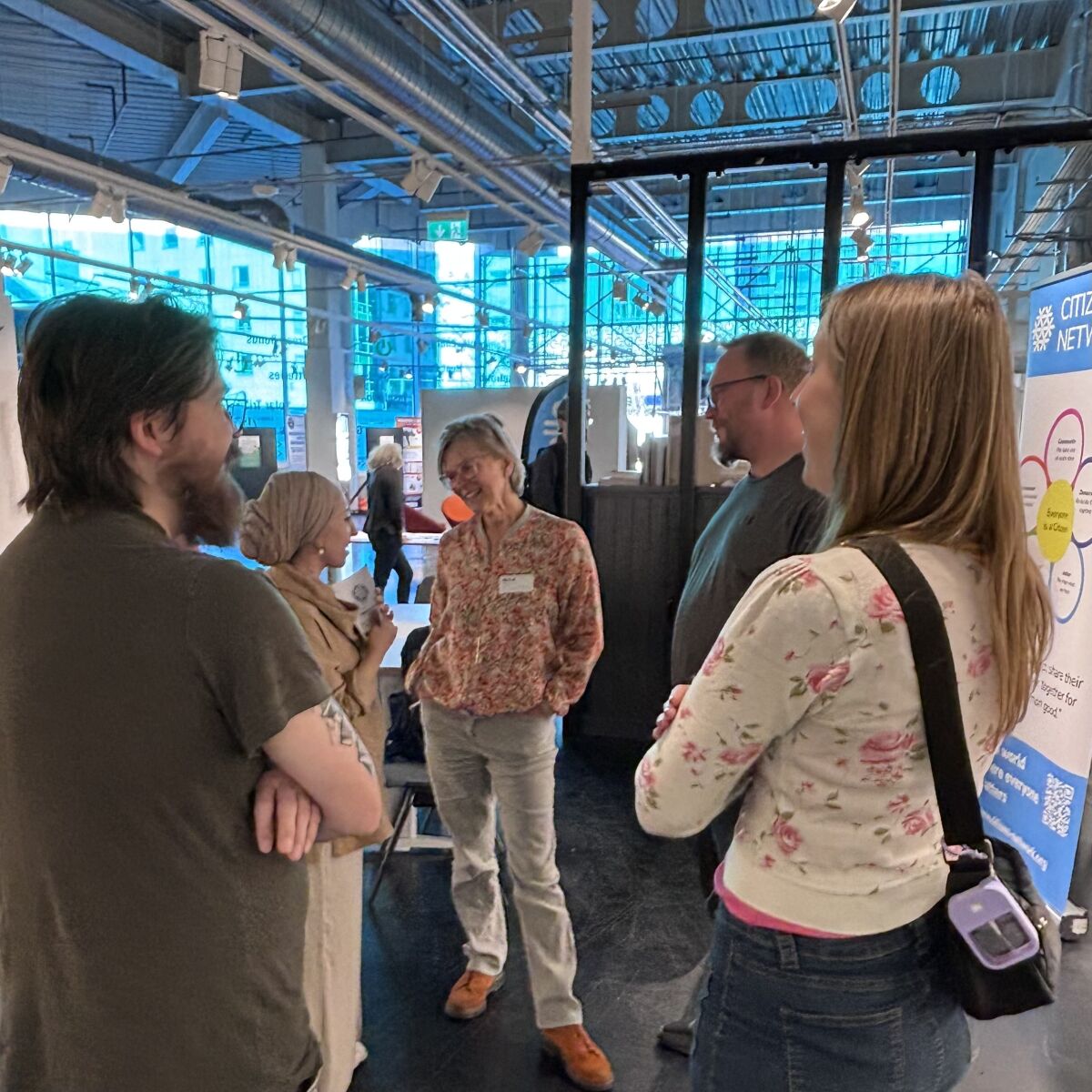
A photo of Abtisam Mohamed MP chatting with Kate West of Family Voice Sheffield at our event in March.
We’ve also had great support from some local politicians. Louise Haigh MP (Sheffield Heeley) has taken great interest in these issues and sent a very supportive submission to the Casey Commission on Social Care. Olivia Blake MP (Sheffield Hallam) has hosted an event in Westminster on Individual Service Funds with us and allies from Sheffield University. Baroness Natalie Bennett (The Baroness Bennett of Manor Castle) co-hosted our event on citizenship and neighbourhoods at the House of Lords.
Abtisam Mohamed MP (Sheffield Central) joined us at our recent event in Sheffield and you can read a summary of that event here.
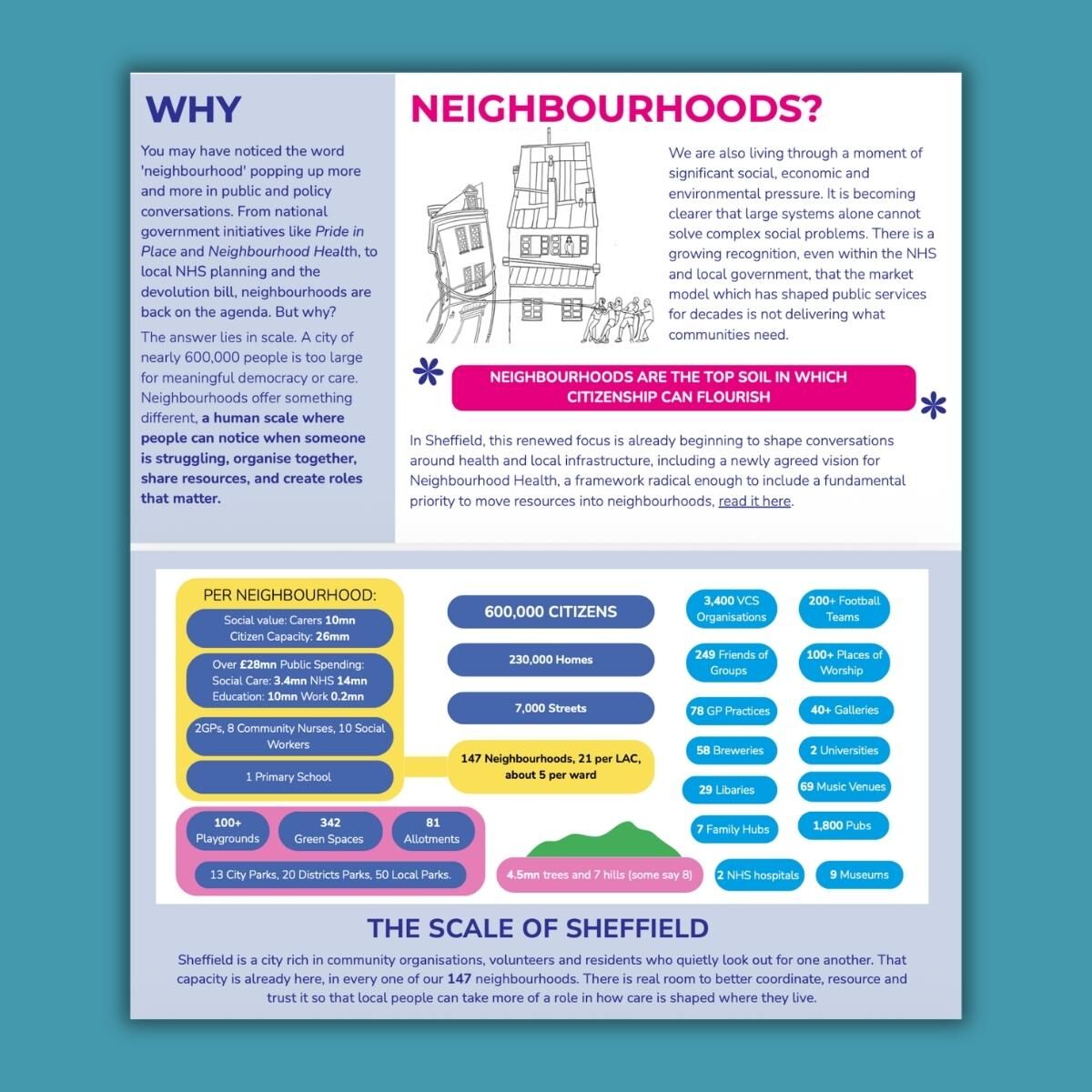
There is still a lot to do and Citizen Network will only be one catalyst in helping achieve the changes we need to make. Ultimately these changes demand the development of new forms of organisation and capacity at a neighbourhood level. This is work that needs to be led by local people building on what people already have and what they want to change. In addition system change will be required, this will need local system leaders to trial changes in how money is used and how staff work.
Times are challenging. Recent changes in the NHS have led to some confusion about priorities and while it is good that the current NHS strategy is emphasising the importance of neighbourhoods in most places its plan is not actually about real neighbourhoods but large administrative units for much more limited reforms. “NHS neighbourhoods” are not neighbourhoods. However policies, like the Devolution Bill and Pride in Place indicate that there is a change coming and campaign like We’re Right Here will keep the pressure on. It is also likely that the new Prime Minister will be much more willing to consider radical reforms and will have much less patience for some of the confused accountabilities that mean that in many places today people have even less influence than they did a few years ago.
What is most striking is that it is clear that the market-models and the ideology which have dominated government policy for 40 years are now dead. It will take time to wake up to the possibilities that are now emerging. But nobody in local or central government really believes in markets or trickle-down economics. Increasingly we are seeing the emergence of communitarian thinking, an idea championed for decades by Citizen Network Fellows like Henry Tam.
So far we have not persuaded the rest of South Yorkshire to join us in exploring the Neighbourhoods of Care vision, however we are now getting strong interest from other local areas and I’m confident that we will have a larger community of local authorities working with us by the end of 2026. It is this kind of coordinated shift in social policy in action that can start to provoke faster and more profound changes.
The most important step now is to find the people and places who really want to begin to make the changes and the good news is that there are good people doing great things everywhere you look.
Citizen Network will continue to publish examples of local change and citizen action, and we’re particularly keen to support:
Thanks for joining us on this journey, please keep in touch.
best wishes
Simon
Simon Duffy
Citizen Network
