Developing effective forms of citizen democracy.
For communities to improve their quality of life, their members need to cooperate in nurturing shared values and guiding collective decisions. It is not enough to have a superficially ‘democratic’ system that can all too easily be undermined. Citizens can hardly be said to have a meaningful role in shaping public affairs if many are left uninformed or misled about key issues, deeply divided that they cannot work towards any common interests, or unable to count on fair and accountable processes for taking on board their views.
We should strive to bring about effective forms of citizen democracy – whereby people can share power equitably and engage on an informed and inclusive basis in cooperative problem-solving.
Citizen democracy is important not just in the context of a sovereign state; but also in the running of a city or a neighbourhood; in schools or housing associations; in community groups or NGOs; in trade unions or businesses; and in international government institutions. At all levels of society, unless we can together develop solutions that reflect our shared understanding of how to respond to the social, economic, political, and environmental problems facing us, those problems could end up being ignored, or worse, exacerbated by those with vested interests.
In order to develop citizen democracy and empower communities, it is vital that effective practices are better understood, widely promoted, and increasingly adopted. To this end, Communitarian Forum aims to share helpful pointers and useful resources. We will draw attention to what needs to be addressed, show how they relate to current issues and the latest findings, and propose actions for communities, institutions and public policy makers.
We want to show how improvements to democratic infrastructure and community engagement can enable citizens to have an informed influence over wider decisions that affect them, and experience the meaningful difference they can make. This will contribute to societal problem-solving, countering inequalities, and displacing antagonism by cooperation.
A. Civic Togetherness
[1] Community development and common purpose.
[2] Cohesion, diversity, and tackling discrimination.
[3] Rights & responsibilities of democratic citizenship.
B. Informed Deliberations
[4] Political education, lifelong learning in democracy, and learning through participation.
[5] Expert assessment, objective investigation, and impartiality in public discourse.
[6] Regulation of irresponsible communication.
C. Shared Power
[7] Subsidiarity and development of participatory decision-making.
[8] Curtail civic disparity in the ability to vote and influence others’ votes.
[9] Fortification of public accountability of electoral arrangements and office holders.
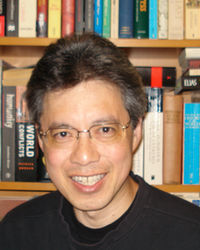
Convenor: Henry Tam
Advisory Group: Gabriel Chanan, Helena Kettleborough, Diane Warburton, Simon Duffy
Contributors: Cormac Russell, Perry Walker, Paul Thistlethwaite, Martin Simon, Jason Lehman, Marilyn Taylor, Edda Sant, Titus Alexander, Barry Quirk, and others.
Communitarian Forum’s ideas for the development of citizen democracy and empowered communities draw inspiration from a wide range of thinkers – e.g., Emile Durkheim, L. T. Hobhouse, John Dewey, Mary Parker Follett, Jane Addams, R. H. Tawney, Hannah Arendt, Paulo Freire, Elinor, Ostrom, Robert Bellah, Philip Selznick, Amitai Etzioni, David Marquand, Jonathan Boswell, David Miller, Benjamin Barber, among others. Our common focus is to explore how in different organisational settings, people can connect with each other and their collective decision-making arrangements to bring about outcomes that reflect their shared values and informed deliberations.
If you have any question or have ideas and practices you would like to share, contact the convenor, Henry Tam.
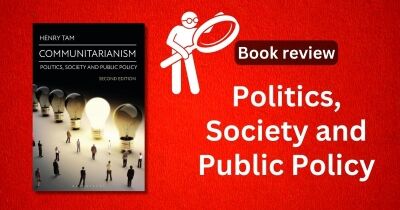
Henry Tam is the author and editor of numerous books on politics and public policy, including Communitarianism and Time to Save Democracy; he was the Head of Civil Renewal under the Labour government (2003-2010); and former Director, Forum for Youth Participation & Democracy, University of Cambridge.