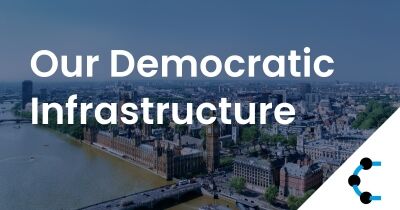
Democratic activists met and reflected on the role of citizen assemblies at the Irish Embassy.
Author: Dr Michael Little, Ratio
The following extract is taken from the paper:
Part One: The Backdrop
Preface
Ireland has a codified written constitution. A living, breathing constitution. One that is evolving beyond its patriarchal roots.
In the last decade, two amendments exemplify the evolution:
- The 34th Amendment (2015): Article 41.4: ‘Marriage may be contracted in accordance with law by two persons without distinction as to their sex’
- The 36th Amendment (2018): Article 40: 3.3 ‘Provision may be made by law for the regulation of termination of pregnancy.’
These changes do not set Ireland apart. In fact, they bring the country into line with other economically developed nations. But the process of achieving change is different.
Like most major social change around the world, the catalyst and drive came not from politicians and parliaments but from moral agents going against the grain of the dominant moral order and organising for change. Building on the LGBTQ+ rights and feminist movements around the world, what Mancur Olsen calls small, concentrated, disciplined and focused groups of social activists -including Katherine Zappone co-convenor of this seminar- fought for over a decade to change the minds of their fellow citizens and politicians.
In both cases, grass roots movements were the catalyst for change, and led to the Irish Government commissioning citizens' assemblies, each bringing together 99 people chosen by sortition to take evidence and deliberate on the need for change. Government accepted the assemblies’ recommendations, in each case for a change in the constitution, which in Ireland requires a referendum. In both cases, a clear majority of the people voted in favour.
The Seminar
The seminar was convened by the Irish Ambassador to the United Kingdom, Martin Fraser, and by Katherine Zappone, a community organiser, academic and former Senator and then Teachta Dála and member of the Cabinet in the 2016 to 2020 government. The premise for the meeting was simple. In Ireland, there are clear Oireachtas (parliament) procedures that oblige the government to respond to Citizen Assembly recommendations.
The seminar explored a single question: do these practices inform the future of democracy?
The seminar was organised by the Embassy and Ratio. It brought together a diverse group of people working to extend democracy in a range of ways: leading major movements of change; working on behalf of residents in economically deprived neighbourhoods; building on the power of co-operative and mutual organisations; working as an elected politician in Westminster; releasing the power of communities through community organising and new local democratic processes; helping the citizens' assembly movement in the U.K. to cohere and grow; providing the evidence base for better democracy and government.
There convening did not have an objective other than to reflect and explore. As Kate Brown from the Co-operative Group reflected after the meeting: “we need more conversations like this, bringing together diverse expertise, convened by a person or organisation in authority, and adopting a neutral stance, and seeking new ways of addressing major policy challenges”.
Read and download the free pdf in your browser, link below.
The publisher is Ratio. Citizens' Assemblies and Deliberative Democracy © Ratio 2026.
Constitutional Reform, Neighbourhood Democracy, politics, England, Ireland (Republic), Northern Ireland, Scotland, Wales, Paper