The conflict over parking charges in East Lothian reveals the limitations of current systems of local democracy.
Authors: Lindsey Horner and Jenny Lyus
Scotland has a stated strong ambition towards greater participatory democracy. There’s an array of initiatives around Community Empowerment, Participation Requests, Community Wealth Building, Participatory Budgeting, Community Councils, Citizens' Assemblies, petitions and consultations all pointing towards this aspiration. Yet having many procedures to participate in is not the same as gaining more power. In this article we, 2 authors, Lindsey and Jenny, use recent controversy in East Lothian as a case-study to examine the dynamics at play in Scottish local government. We write together, though occasionally we switch to ‘I’, followed by our name in brackets, to discuss specific individual perspectives. We explore our own experiences of the contemporary democratic state of local democracy in Scotland and consider why a more genuinely participatory approach might be needed, and what forms this might take to include resources and decision making power. Beginning this writing journey together our objective was to build a network of interested parties to develop and advocate our concerns to the Scottish Parliament, including a petition. However we have been surprised where this process has taken us and the different conclusion we end up with at the end of the article. As co-authors between us our professional experience is in academia based education and peace building (Lindsey) and in third sector disability projects and activism (Jenny). More importantly though, we are also citizens of East Lothian, which is the main lens we use in writing this article. The validity of our perspective comes from our own living experiences and local knowledge, as we watch and interact with the unfolding local story.
Scotland is a country whose identity is built as much on myth as on policy: a land of kelpies, Nessie and Jacobite rebellions, but also publicly owned water, free university education and a lingering sense that another way of organising society might be possible. In this setting we find East Lothian, a pleasant idyll consisting of mostly rural land and beautiful coasts in East Scotland. It’s not somewhere you expect to make the news often. But perhaps you have heard of it, as it has recently been grabbing headlines about an epic conflict over parking measures between its local council and many residents that feel ignored, gaslit and at times simply treated with disdain.
A dramatic headline in the BBC reads “'Unprecedented resistance': The battle over North Berwick's parking meters” (Delaney and Godden 2026), but what is the background to this story? What has led to this visceral feeling by many East Lothian residents underpinning North Berwick’s rebellion? How does one of Scotland's sleepiest middle-class towns become the scene of unprecedented vandalism with little local criticism of the vandals? In a country more readily associated with the right to roam than acts of sabotage, the answer is surprisingly simple: enough people have concluded that democratic participation has stopped working.
This article is not about parking, but takes the example of the East Lothian parking debate as a starting point to explore how local governance structures are failing Scotland’s citizens. We use the case-study of East Lothian as, arguably, a microcosm of Scotland’s larger democratic deficit, to put forward our case: despite Scotland’s innovative and participatory sounding political discourse, currently it retains power at the top. Rather than ‘empowering’ citizens it serves to alienate and exhaust them.
Long before the first parking meter was vandalised, East Lothian residents had spent years engaging through almost every democratic channel available to them. Following the East Lothian Council's (ELC) decision in 2022 to develop parking management proposals, consultations were held across North Berwick, Dunbar, Haddington and Musselburgh, attracting thousands of responses through surveys, public meetings and the formal Traffic Regulation Order (TRO) process. Campaign groups emerged. Community Councils scrutinised the proposals, submitted detailed objections and, in several cases, expressed loss of confidence in the Council's handling of consultation and engagement. Local businesses wrote open letters, residents packed public meetings, wrote to councillors, submitted formal representations, lodged complaints, attempted Judicial Review and launched petitions attracting thousands of signatures. One petition opposing the proposals in North Berwick was signed by more than half the town's population, yet campaigners argued it was dismissed on procedural grounds rather than debated on its merits (Hayton, 2026). Community Councils devoted volunteer hours to analysing the proposals and submitting detailed responses. Gullane Area Community Council unanimously passed a vote of no confidence in the Council Leader and councillors supporting the scheme, arguing they had proceeded "despite clear and repeated opposition from residents and businesses they represent." Other Community Councils also voted no confidence, publicly challenging the consultation process and evidence base, reflecting an extraordinary level of sustained civic engagement (Sharp, M. 2026). Community Councils such as West Barns and Pencaitland & District say they didn’t even receive a response from East Lothian Council to their votes of no confidence.
Seen in this light, East Lothian is not principally a story about damaged parking meters. It is a story about extraordinary civic participation. Whatever one thinks of the merits of paid parking, few local policy disputes in recent Scottish history have generated such sustained, organised and evidence-based public engagement.
In the words of John Wellwood (North Berwick citizen) proposing a joint group to resolve the issues:
“Work with us to make this work, listen to the people who live and work in the town. Today, North Berwick feels bullied, ignored and as if we are living in an experiment built by incompetent scientists. We feel ELC and (most) councillors are behaving in an anti-democratic and a non-common-sense manner.”
(Wellwood 2026)
I (Lindsey) experienced the double-speak of ‘empowerment’ first hand when I petitioned the council to pause the parking scheme until a comprehensive impact assessment was completed. After collecting over 4,000 signatures, I was invited to the Petitions and Community Empowerment Review Committee, where I felt grilled for over an hour about my petition. A moment intended for residents to hold the Council to account became a reversal of roles. Instead, I was the one who had to justify my stance, there were suggestions that my concerns were bandwagoned by populism, and I was bamboozled with technical arguments about “proportionate responses” and required to condemn potential threats of violence.
The officers’ recommendation was clear: acknowledge concerns but continue, a position already reported in the local press days before the meeting. The knowledge that the recommendation had effectively already been decided before the meeting, made the extensive questioning feel less like a genuine attempt to reconsider the proposal and more like a performative exercise in consultation, after the key decision had already been reached. Or perhaps more cynically, an attempt to dissuade other local residents from using the democratic levers available to them.
I (Lindsey) raised concern over what I felt were significant gaps in the Council’s statutory equality impact assessment, including concerns that it had not followed its own published guidance. These issues were ultimately treated as a matter of professional judgement, rather than as a question of procedural compliance. The Council was effectively able to mark its own homework: assertions about having taken a “proportionate” approach were accepted without a meaningful independent challenge or substantive evidence demonstrating that the required assessment had actually been undertaken. This attitude was particularly evident when the council leader tried to explain to me (the petitioner) that they were elected to consider both the ‘experts’ and ‘objectors’ points:
“So as the petitioner, do you accept that the elected representatives have got to take decisions on their own personal views after listening to the professional advice and hearing what the objectors are saying and then come to a decision? And whether we like that decision or not, the next time will be the council election, and people can decide to vote that person or vote against them. And that's just, that's the nature of where we are, and we have to deal with that. And I will always take the decision, what I think is the right decision for the best interest of the community that I'm here to represent. Petitioner, could you respond to that, please?”
Norman Hampshire (ELC 2026)
This thin democracy (Barber 1984) style attitude, where citizens have no role for 4-5 years and councillors, armed with their technical words, are only accountable in election years would certainly explain some of the feelings of alienation and perceived democratic deficit found in East Lothian. It simply does not match the expectations of local residents. We, the authors, wholeheartedly agree with the Citizen Network's Manifesto that “Democracy should be more than reluctantly putting a cross in a box, then hoping that whoever is elected will listen to us.” (Citizen Network, 2025).
To unpack this example more broadly, it is useful to consider how an “architecture of containment” (Bennett et al. 2022) operates through the language and procedures of current Scottish democratic innovations and participation. Bennett et al. draw attention to the ways in which civic engagement is not simply enabled or restricted, but actively structured through institutional arrangements, procedural norms and forms of expertise. Their argument highlights that participatory spaces are never neutral arenas in which citizens’ voices enter on equal terms; rather, they are shaped by rules, categories and expectations that determine what forms of knowledge are considered legitimate, which issues can be raised, and how participation is translated into decision-making. There’s often a “focus on ‘outcomes’ and evaluation processes [which] reflects managerial trends to monitor measurable activities” (ibid 621). In this sense, neoliberal containment does not necessarily operate through outright exclusion. Instead, citizens may be invited to participate through consultations, feedback mechanisms or deliberative processes while the fundamental parameters of debate, evidence and acceptable outcomes have already been established. Something like a Participation Request is just a request, the process isn’t power in and of itself, and it has to be done according to bureaucratic rules. The architecture of participation can therefore absorb critique and create the appearance of openness while limiting the extent to which civic engagement can challenge existing institutional priorities or redistribute decision-making power.
“All in all, Participation Requests have the potential to be both a co-option mechanism for the placation of organized local interests and an emancipatory mechanism that allows new voices to shape policy agendas to enable co-production in public services. However, realizing that potential depends on the ecology… it is context, culture, and agency that shape the meanings and practices that result… [but] the prescribed process gives, probably unintentionally, those already with power (including some community groups and public authorities) the primary voice.”
(Bennett et al. 2022: 622)
In East Lothian, this ethos was visible in the use of terms such as ‘empowerment’ being absorbed and re-constituted into a committee! In practice, this felt less like a genuine redistribution of power and more like bureaucratic doublespeak: a language of participation that did not necessarily alter who held decision-making authority or what forms of knowledge were treated as legitimate. This was also evident in the repeated use of professional language such as “proportionality” and “professional judgement”. While these terms have an important place in public administration, they can also function to contain challenge by reframing questions about accountability as matters of expert discretion.
The barriers to challenging this are significant. The difficulty of contesting this form of power lies in its dispersed and self-validating character. Rather than operating through visible coercion, it is reproduced through networks of institutions that share common assumptions about expertise, evidence and appropriate forms of participation. Challenges are therefore often redirected into technical arenas, where questions of democratic legitimacy are reframed as questions of administrative correctness. Citizens may be given mechanisms for complaint and review (ombudsman processes, formal complaints procedures or appeals to regulatory bodies such as the Electoral Commission), but these mechanisms frequently remain confined within the same discursive boundaries as the original decision-making process, making it difficult to challenge not simply a decision, but the underlying conditions that made that decision appear reasonable in the first place.
An example of how diffuse a form of power this procedural legitimation and epistemic closure is can be illustrated in the formal complaint that I (Lindsey) submitted to the Commissioner for Ethical Standards in Public Life, alongside the petition. As a mechanism for complaint and review, and one of the few avenues of power available to the public, its aim is to promote openness, accountability, and public confidence in local government. However, the complaint was absorbed into procedural categories, narrowed into technical questions, and in my opinion returned without addressing the underlying issue: how elected representatives use their authority to frame contested decisions and how public confidence is maintained when those decisions are being made.
A statement can be factually accurate while still creating a misleading impression depending on the context in which it is presented, the assumptions it invites, and the conclusions it encourages the audience to draw. Facts and statistics do not communicate meaning independently of their framing. Also, a process of consultation can be held without any meaningful consultation occurring. Yet the factual nature of statements and administrative correctness of language apparent in ELC resulted in my complaint being closed without investigation. This technical approach of the office did not allow for the consideration of the framing of ‘facts’ and the cumulative impact over time on a political narrative, or assessment of how data from consultations changed anything.
I (Lindsey) spent considerable time preparing the complaint based on key principles underpinning the Councillors’ Code of Conduct in terms of Openness; Honesty, Accountability and stewardship, and Leadership, and specifically considered evidence around ELC misleading the public and the authenticity of public engagement. I took care to consider the terms of the office and tried to submit something on their own terms – you never get to interact on your terms – however it felt like the process was filled with trip wires and it seems from the response I received that I lacked the ability to navigate the process successfully. It feels like a mechanism that appear to empower citizens ultimately only manages, filters, and neutralises challenges without requiring institutions to confront the deeper questions of power, legitimacy, and democratic participation.
One example of this broader tension can be seen in Scotland’s flagship community empowerment mechanism, Participation Requests. Introduced through the Community Empowerment (Scotland) Act 2015, Participation Requests provide communities with a formal route to engage with public bodies around improving services and outcomes. The need to ‘request’ participation itself appears to be a self-undermining concept, as meaningful democratic participation should not depend upon permission from those if, as citizens, they should already possess decision-making authority. Furthermore under the Act they do not redistribute decision-making authority. They create opportunities for communities to influence how services are delivered, but not mechanisms through which communities can challenge, pause, or require reconsideration of major political decisions.
The East Lothian parking charges controversy illustrates this style of limitation. Residents were not seeking simply to participate in improving the delivery of a predetermined policy; they were contesting the legitimacy and direction of the policy itself. In this context, the participatory infrastructure available to communities is arguably insufficient because it offers voice without providing a meaningful democratic lever over the decision-making process. The issue was therefore not the absence of participation opportunities, but the absence of mechanisms capable of transferring power.
Arguably, one of the outcomes of this "architecture of containment” is it serves to alienate and exhaust citizens. While part of the architecture, the exhaustion we experienced in engaging with ELC was significant enough to deserve its own subheading.
Previous petitions on the parking issues in East Lothian had been rejected (Hayton 2026) before Lindsey’s was accepted as legally competent, illustrating how procedural thresholds can themselves become barriers to participation. I (Lindsey) write here as a resident, not as an academic, but I am an academic and that distinction is not inconsequential. As an academic my ability to navigate policy language, identify procedural gaps and challenge institutional claims undoubtedly shaped my engagement. Even with that background, the process was demanding and exhausting. For residents without similar resources, the expectation that they can successfully contest and navigate technical governance processes presents a much higher barrier to meaningful participation.
My (Jenny’s) reaction to watching Lindsey’s experience was relief that we hadn’t put my name to the petition, as this had been a fairly arbitrary decision at the time, and there was no expectation that the petitioner would be grilled in this way in a Council meeting. I have experience of advocacy processes but would have been intimidated and tongue tied in that scenario. It seems that you would need to have a professional academic, journalism or political background to feel equipped to handle it well. Even doing research for this article, the options for participatory engagement feel complicated and overwhelming.
These cumbersome processes attract a type of demographic, overlapping with personality type. As Black characteristically replied to Bookchin’s municipalism:
“Face-to-face democracy is in-your-face democracy. To the extent that the tireless typicals turn up, they discourage those not so afflicted from participating actively or returning the next time. … who but a political pervo-voyeur could possibly get off on these solemn ceremonies? Some people like to watch autopsies too. The same types who’d get themselves elected in a representative democracy tend to dominate, by their bigmouthed bullying, a direct democracy too (Dahl 1990: 54). Normal non-obsessive people will often rather appease the obsessives or even kick them upstairs than prolong an unpleasant interaction with them… And so the minority of political obsessives, given an institutional opportunity, tend to have their way.”
Black (1997: 32-33)
Lindsey is someone who engages with politics and debates, but she finished the meeting feeling emotionally exhausted. It didn’t feel like an attractive activity to repeat as part of regular participatory democracy. Will we be exhausted before the various potential democratic levers are technically exhausted? What does this indicate about the nature of the participatory democratic system? If the purpose of a system is what it does (Beer, 2001), then the purpose is to exhaust any proactive citizens who want change, not meetings. Or if the processes are designed for the ease of the admin staff at the Council, or the elected officials, then the purpose of the system is to smooth the consultation tokenism for those governing. That is not democratic and it certainly isn’t community empowerment.
The notion of the expert-objector binary found in the Petitions and Community Empowerment Review Committee discussion (ELC 2026), further reinforces a divisive dynamic for participation. Residents' concerns and living experiences can be positioned as subjective opposition, while technical assessments are treated as objective evidence. Yet community knowledge about accessibility, affordability and everyday impacts is precisely the kind of evidence that equality processes are intended to capture. This framing also creates a false opposition in which one side is assumed to be right and the other wrong. Democratic decision-making, however, depends on negotiating between different forms of partial knowledge rather than privileging one, as binaries tend to encourage.
More fundamentally, the expert-objector binary functions as a discursive technology of governance, allocating epistemic authority before deliberation has even begun. ‘Experts’ are defined by what they know, while ‘objectors’ are defined only by what they oppose, obscuring the situated, embodied and experiential expertise that residents bring. A more democratic framing would distinguish between technical expertise and community expertise, recognising both as legitimate but different forms of knowledge. The challenge of democracy is not to choose between them, but to hold them in productive dialogue.
As mentioned in the introduction, this is not really about parking, it is about a perceived democratic deficit, at odds with the myth of community ‘empowerment’ in Scottish political discourse. We argue this has the risk of entrenching populist logics into the political landscape, something Scotland has, for the most part, contained. Rather than existing in opposition to democracy, populism can be understood as emerging from democratic deficits. As Laclau ([2005] 2018) argues, populism arises when citizens perceive that existing institutions no longer represent ‘the people’ or provide meaningful avenues for participation. The controversy surrounding parking charges in East Lothian illustrates this dynamic. Where consultation is experienced as procedural rather than participatory, and decisions appear predetermined, distrust shifts from particular policies to democratic institutions themselves. Populism, in this sense, is less the cause of democratic decline than one possible response to it, paradoxically also furthering democratic decline.
When this point was mentioned at the petitions meeting, albeit more briefly, the response was to blame the people rather than the democratic shortfall they felt. The petitioner was asked “you mentioned populism in what you just stated there just now, do you think there's a risk that even your petition has been somehow kind of bandwagoned” Lyn Jardine (ELC 2026). This revealed a stark difference in how the term was understood, where legitimate civic and democratic levers (a petition) might be dismissed as rebel-rousing and populist. A similar attitude was evident towards organised resident correspondence and community mobilisation, which were characterised as "social media campaigns" (ibid) rather than considered as potential sources of substantive evidence. While such campaigns should not be treated as statistical measures of public opinion, they can constitute forms of participatory democracy through which communities articulate living experience and identify impacts that may not be captured by technical surveys. In both instances, attention shifted from the democratic deficits generating public dissatisfaction to the legitimacy of the citizens expressing it.
This dismissive approach to genuine democratic debate might be considered what Glynos and Moden call ‘populist hype’ (2016) which they described as a simplistic form to limit the terms of conversation. It was a surprising accusation to make against a petition which clearly stated it was “submitted in the spirit of constructive engagement and in the interest of fair, inclusive, and accountable decision-making for East Lothian’s communities” (Horner, undated). More accurately, the origin of the petition was as a response to our growing concern about how a democratic deficit may lead to (actual) populism and perhaps far right election success. We were watching increasing frustration and the willingness of ordinarily reasonable and engaged citizens to engage in illegal acts of vandalism. No rebel rousing was required to get people to sign a petition, our challenge was the exact opposite: that people were already moving beyond the expectation that these actions hold any merit. Their anger could not be well expressed by a petition campaign.
We see a pattern of dismissal in the Council’s responses: community concerns are framed as ‘a lack of understanding’ and the solution is clearer explanations; Social Media campaigns and petitions are disruptive at best (but possibly populist) and therefore to be managed rather than considered; residents’ claims of low High Street footfall, which correlates to the introduction of the parking charges in North Berwick, are blamed on negative social media (which existed before the low footfall), in effect gaslighting and blaming residents for trying to exercise some form of agency. This tone deafness, combined with the label ‘obstructors’, echoes a cynical recasting of large groups of society as uneducated and dangerous. This group is often contrasted with educated, liberal democrats (Bovens & Wille, 2018). While this picture is much more complicated in reality, it is a convenient way of dividing society into ‘the mob’ (obstructors) and an educated middle. It is easy to see how councillors and officers might come to place themselves in this latter group: the people with the qualifications, the reports and the evidence. In doing so, they risk seeing themselves as the guardians of reason and truth, while residents are cast as driven by emotion, self-interest or misinformation. Once that distinction takes hold, it becomes much easier to dismiss living experience as bandwagoned emotion, rather than recognise it as another form of expertise.
However, the assumption that the people are uninformed is increasingly difficult to sustain. Deliberative research shows that ordinary citizens are capable of sophisticated judgement when given time, balanced information and opportunities for dialogue (Fishkin, 2013). Moreover, conventional measures of political knowledge often underestimate citizens by privileging recall of national political facts over the contextual and local knowledge they bring to democratic decision-making (Rapeli, 2014).
We don’t encourage vandalism of parking meters, though we do admit to quite enjoying the art gallery installation style re-telling of the story through framing and labelling a damaged meter by Joseffson, a conceptual artist from Wales (McAlinden, 2026). We also recognise that the responsibility for this vandalism not only lies in the individual vandals, but also in the local council. They have to take some responsibility for residing over a perceived democratic deficit that transformed an engaged civically minded community into people committing ‘unprecedented’ vandalism. We do not agree with the dismissal of this action as populism, which while we fear may take root, seems to have been largely avoided so far. A single issue candidate (on parking) stood in the recent Scottish election, but the citizens were able to see beyond simplistic single-issue politics and they were unsuccessful.
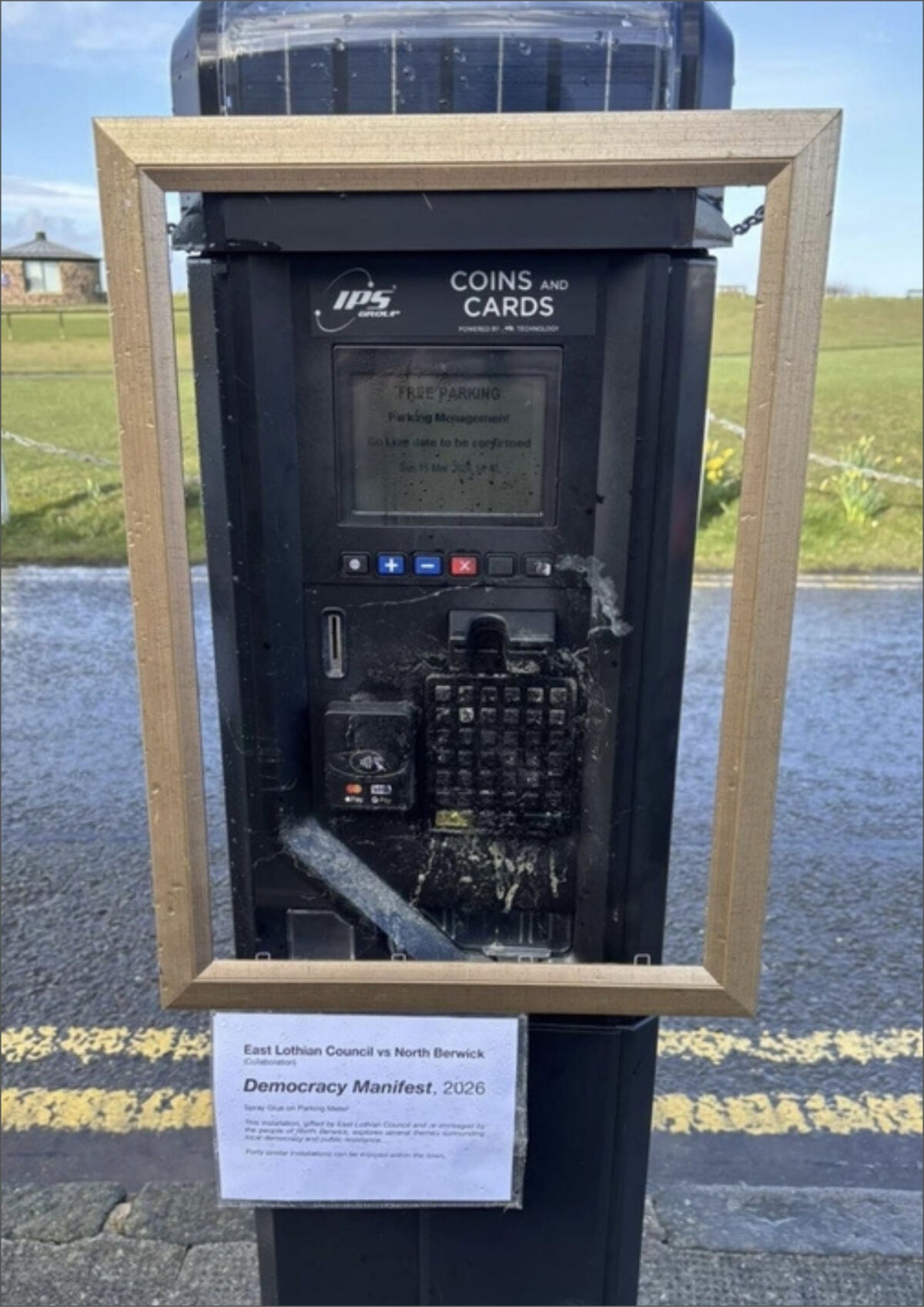
Photograph by Steve Wright.
Artist: Joseffson - a conceptual artist from Wales exploring psycho-geography in the wild and built environment.
Text says:
East Lothian Council vs North Berwick
(Collaboration)
Democracy Manifest, 2026
Spray Glue on Parking Meter
This installation, gifted by East Lothian Council and re-envisaged by the people of North Berwick, explores several themes surrounding local democracy and public resistance.
Forty similar Installations can be enjoyed within the town.
Again, what is more remarkable in this story is the strength of civic engagement, how communities are not giving up and still aim to hold the council accountable, and so far the majority are resisting populist antics. However the available democratic levers to do this in the process are getting to the point of being exhausted and in that process revealed as not fit for purpose. The more we, the authors, are drawn into the complex, exhausting technocentric process of governance, that seem to be designed for the ease and benefit of those governing rather than the citizens, we get closer to agreeing with Caroline Lucas that “When the democratic deficit is so enormous, people are left with very little option but to take peaceful, non-violent direct action" (Harvey and Walker, 2013).
Ironically the content of what our petition was asking for was an Equalities Impact Assessment around the parking management changes, but it seems like local democracy in Scotland could do with a fresh Equalities Impact Assessment itself too.
Women, young people, disabled people and cultural minority groups tend to be underrepresented (Scottish Parliament, Citizen Participation and Public Petitions Committee 2022). This isn’t necessarily direct discrimination, it’s often associated, practical constraints like caring responsibilities and limited time around work. It requires confidence in your ability to engage in the type of verbal and intellectual exchanges that happen in deliberative democracy and this type of confidence isn’t equally distributed in minority groups. This is by no means unique to Scotland, research into Participatory Budgeting (another Democratic Innovation in Scotland) shows that unequal gender participation goes right back to its origins in Porto Alegre (Gandin and Apple, 2002).
The people who already have the greatest assets and loudest voices are the most likely to benefit when power relationships aren’t taken into account (Elliott et al 2018), “external inclusion and "getting a seat at the table" might be limited to those capable, with skills and know-how to take advantage of what is frequently perceived as complex legislation.” (Bennett et al, 2022: 621). We get a sense of middle-class capture.
Recently there has been a lot of talk about Devolution Max and Manchesterism. Andy Burnham, at the time of writing the current UK Prime Minister, in the lead up to becoming Prime Minister, pointed out that “Britain is the most centralised G7 country for tax and spending policy, and is among the most economically unequal in the developed world” (Partington and Elgot, 2026). He has also suggested that “The people of Dundee and Bangor feel just as distant from Holyrood and the Senedd as they do from Westminster” suggesting that local devolution should be a priority (Cochrane, 2026). In an interview about football, New York Mayor Zohran Mamdani said “many people have lost faith in government. The place that they earn that faith back or they decide to trust again is at the most local level. That's where they see what it can look like to have a government that delivers for them” (Office of the Mayor of New York City, 2026). This is why local participatory democracy is so important in our opinion, as the first line of defence against an increasing global political malaise and rise of right wing populism. With the shocking rise of Scotland’s new ‘Blackshirts’ this is not panicked hyperbole (Mackay, 2026).
However, as we move from deconstruction to ideas for reconstruction we also feel we need to sharpen the notions of ‘localism’ in these quotes above. City or countywide decision making is not the most local level, at least not in Scotland. Centralisation of governance here is more profound than in other developed countries:
“The Highland Council encompasses a vast territory comparable to Belgium, yet serves a population roughly the size of Belfast. This geographical sprawl forces councillors to traverse hundreds of thousands of miles annually just to facilitate basic connection with peers and the residents within their administrative boundaries… There’s been a process of centralisation, quangoisation and privatisation hollowing out local democracy... The average Norwegian municipality has 12,500 people – the average Scottish council serves 162,500”
(Riddoch and Bort, 2012)
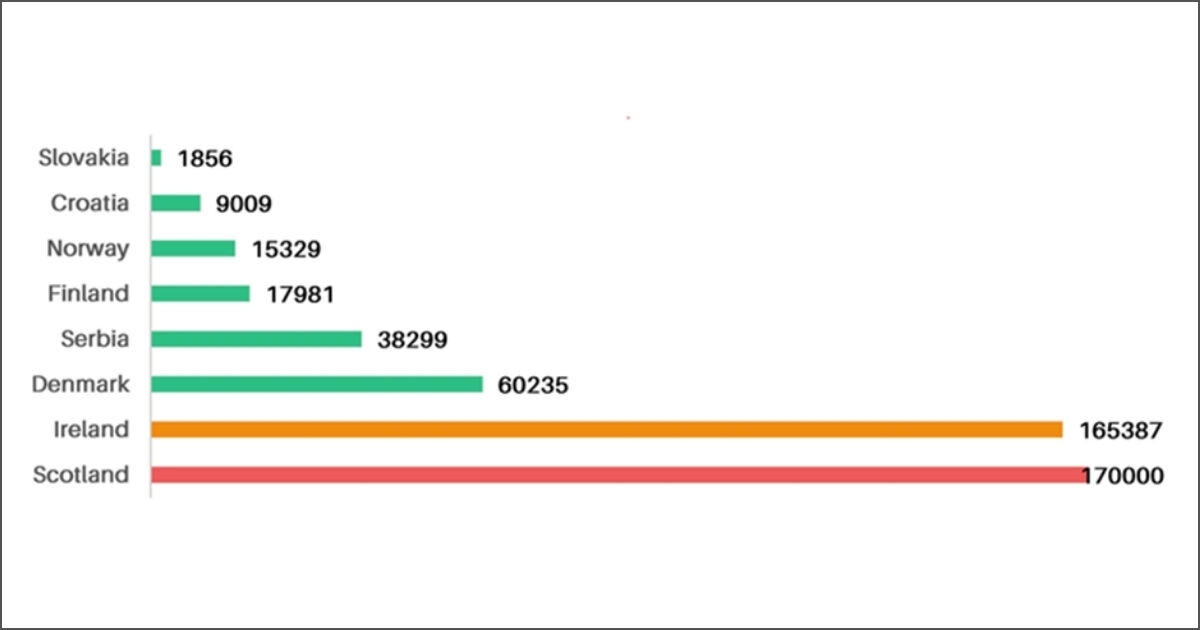
Graphic: Average Population per Municipality for selected European Countries 2022 (Faulds 2025: 9)
This also adds further equalities issues, as groups like women are more likely to find frequent travel a barrier. Local Government Minister Marco Biag tweeted that current counties are “too small to be strategic, and too big to be actually local” (Faulds, 2025: 8).
For genuine local participatory democracy, we can see in the above example of ELC and their parking changes that current mechanisms are not sufficient, and we need a shift in practice and democratic mechanisms with meaningful citizen power to pause, review, or materially influence decisions before ‘consultation’. This is a major flaw as local governments can make poor or unexpected decisions in between elections.
Petitions do not appear to be sufficient for this as our case has illustrated. One of the democratic levers we haven’t pulled though is a national parliamentary petition, on the broader issues we’re raising here. We have made two attempts so far. The first time there was a problem with the dates of the election, as everything gets postponed, and we were required to meet with our MSP to get their input before being allowed to submit a petition. This would be an obvious barrier if you disagreed with your MSP, although not in this case as we had a productive meeting. When Lindsey submitted the 2nd petition it was rejected and removed from the system because:
“the scope of your petition is very broad, calling for five distinct actions covering topics including local referendums, independent reviews, impact assessments, budgeting decisions and publication duties. While these topics all link back to a central theme of local democracy and accountability, it would not be practical for the Committee to consider them all under one petition.”
(Response email, Scottish Parliament petitions committee)
Lindsey’s amused reaction was “well I only wanted one thing and that was power [for local communities], but I broke it down for them, you can break down the atom too, it doesn’t mean it’s too many things”. The irony is that the required fragmentation identified by the Committee risks obscuring the very issue the petition sought to address. The proposals were not five unrelated requests, but different mechanisms addressing a single democratic deficit: the absence of meaningful local power. The question is therefore not simply how to separate these demands into administratively manageable categories, but how to redesign local democracy to function as a whole instead of silos, so that communities move from being consulted about decisions made elsewhere, to having genuine capacity to shape those decisions. In short the request for a holistic review did not fit the invented rules of governing. Where the citizen’s will does not fit the rules of engagement, the rules of engagement are privileged. The governance structures do not change to accommodate the citizen, the citizen’s request has to change to accommodate the rules of governance, regardless of how that impacts the very nature of the request and what can be requested. It raises the question of who structures of governing are for: the governed or the government? Arguably, only one answer is democratic.
The following suggestions set out possible ways of advancing a shift towards practice and democratic mechanisms with meaningful citizen power:
This shift is not just a preoccupation of the authors, consultation indicates that people want more control and for it to be exercised more locally “The vast majority of submissions expressed views that demonstrate a strong desire for a change to the status quo" (Scottish Government, 2019: 8). It seems that there’s a strong argument for moving actual power to make changes to a proper, local level. Many responses were supportive of this being in the form of better equipping town Community Councils with resources and decision making power (more informal councils below Party Politics level but elected).
In 2023 the Joint Forum of Community Councils in West Lothian put together a blueprint for a new form of local decision making and democracy. It includes a range of increased decision-making powers for community councils, including Community Wealth Building and managing Capital Budgets. They suggest improving access by including updated and increased methods of voting, lottery appointment systems and “An investment in participative systems apps and software” (Joint Forum of Community Councils in West Lothian, 2023: 2).
Relatedly, concerns about the role of Community Councils have been shared by Escobar, who argues “that the time has come to either reform or rebuild. We could reform community councils so that we have one of the most decentralised systems of governance, as we should do if we want to tackle issues locally and nationally. Alternatively, we could rebuild them. We could just start again if people do not want to reform them as they are” (Scottish Parliament, Local Government, Housing and Planning Committee, 2023).
There are fundamental issues with the way community councils were constituted in 1973, as their status as unincorporated bodies limits their legal capacity, preventing them from undertaking community asset transfers and restricting access to some funding opportunities (ibid). This summary by Escobar resonated with our own experiences with ELC:
“It is a chicken-and-egg situation, or a contradictory situation, because when community councils say something that a local authority likes, the local authority will tick the community engagement box and say that the community council said it. However, when the community council is saying something that the local authority does not like, the local authority will say, "The community council is unrepresentative, lacks diversity, lacks legitimacy and we are not going to listen to it." Community councils do not have autonomy, their own assets, their own infrastructure or their own capacity to take on initiatives. That means that they cannot go very far with challenge because they depend on good relationships.”
(Scottish Parliament, Local Government, Housing and Planning Committee, 2023)
A Citizens’ Assembly could offer a different style of forum. These approaches share a common principle: bringing together a representative group of people, selected through processes such as sortition, to learn about an issue, consider evidence from different perspectives, deliberate collectively, and develop recommendations (see further Citizen Network articles for more details, such as Barker, 2022).
It is relevant to note that councillor Liz Allen (ELC, suspended SNP) suggests that a local Citizens’ Assembly is a solution to residents feeling like they are consulted too little or too late (Allen, 2026). Scotland has tried Citizen Assemblies before, in 2020 citizens set their own agenda and spent 6 weekends discussing the big issues facing Scotland with the aim to reach consensus. It demonstrated that “people can work together to find common ground on challenging and complex issues” (Scottish Parliament, Scotland’s Futures Forum, 2021: 3). There was a strong emphasis that any future assembly should not be a consultation body that could be ignored, but be treated as a valid voice of the people of Scotland.
The weakness around Citizens’ Assemblies tends to be whether they really have any teeth to make decisions, it should be empowerment but recommendations often aren’t actioned.
“By definition empowerment means to tie action to discussion (Fung and Wright, 2001). So when decision-making processes are not linked to effective and real changes that affect the community, communities cannot be said to have been empowered. In other words, the effectiveness of empowerment is dependent on the amount of power that communities have to decide about the issues that affect them.”
(Elliott et al, 2018: 304)
The barriers to challenging this (dis)empowerment are significant. The difficulty of contesting this form of power lies in its dispersed and self-validating character. In the Scottish Community Empowerment Act research a local activist reflects on a desire for power but feeling deskilled around how to make decisions for ourselves, so an element of education is required too in order for decision making forums to be effective:
“It is a whole culture of disempowerment: let the system do its work and try to make the best of it. For people to feel heard and worth say anything they would need to feel like their voices are valued and has the potential to influence. People are not used to making decisions together so we as a community need to relearn it. Lots of skills involved in decision making and we are deskilled on how to make decisions because we are all outsourced to experts making it for us. We don't even know what to do with power. (A2)”
(Elliott et al. 2018: 312)
The Citizens’ Assembly experiment appears to have been postponed. This reflects a wider challenge noted within Scottish participatory governance: valuable recommendations can emerge for deliberative processes, yet they often remain unfunded and lack institutional guarantees (Open Government Scotland, 2026). As a result, even well-supported participatory proposals can become vulnerable to changing political priorities, financial constraints, or shifts in administrative commitment. Recommendations need investment, focus on key policy areas and achievable ambitions, which hasn’t been the case so far in Scotland. There is a general need for actual power and resources to be shifted to a more local level.
This desire for more local power is interesting when you look at the 21st Century New Municipalist waves in places like Barcelona, Naples and Porto Alegre, where there has been a sense of transforming the Public into the Commons and a transition from asking for permission to building what you want to see. In the UK context, new municipalist approaches have been significantly shaped by trans-Atlantic exchanges around Community Wealth Building (Brown and Milburn, 2024). This approach seeks to use the economic power of local government, particularly through procurement and investment practices, to support locally rooted, worker owned businesses instead of multinational corporations.
While Community Wealth Building and the more grassroots, citizen-led traditions of New Municipalism emerge from different angles, they are not competing models. Rather, they offer complementary approaches: one focuses on transforming the economic role of local institutions, while the other emphasises expanding direct democratic participation and community control over decision-making (ibid). These approaches in combination seem like they could be well received here.
It chimes with the ethos of places like Dunbar, East Lothian, which was Scotland’s first zero waste town and a sustainability Transition Town. There is already proactive energy around ethical retail community ownership, with shops such as a bakery, grocers and art shop becoming community owned or cooperative. In East Lothian we have an unusual amount of independent shops on our high streets. A strong concern around the proposed traffic regulations is that they disadvantage small, local businesses like this which are situated on the high street, where parking will be charged and time-limited. Local worker-owned cafes and shops will be competing with a new out-of-town development situated in Dunbar’s eastern boundary which offers free parking. Newly approved, large international corporations such as Starbucks and Lidl will be advantaged to extract local wealth in an act of economic leakage that will leave East Lothian, and Scotland.
Once again, however, we see ELC attempting to bamboozle the public with terminology which appears misunderstood, borrowed from experts with a particular perspective, claiming the out-of-town development will help east Lothian “by preventing expenditure leakage from the town and the surrounding area to other parts of East Lothian and Edinburgh, it will also keep money in the community” (East Lothian Courier, 2022). This bizarre claim sits uneasily with a substantial body of literature on economic leakage and local multiplier effects (e.g. Civic Economics, 2004; Fleming & Goetz, 2011; Sacks, 2002; Shuman, 2006). Studies consistently find that locally owned businesses retain a significantly greater proportion of spending within the local economy, whereas externally owned firms are more likely to repatriate profits, centralise procurement, and extract value to corporate headquarters and shareholders elsewhere.
While the immediate area may benefit from the salaries of workers, this will be dwarfed by the profits leaving the council area. If these salaries are from displaced jobs on the high street where businesses close rather than new jobs, even this modest benefit is undermined. New Economics Foundation research indicates that for every £10 spent on a local vegetable box, then the equivalent of £25 ends up circulating in the local area, but if you spend that in a supermarket like Lidl only £14 remains locally (Ward & Lewis 2002, 20). A substantial share of the potential profit, management fees, royalties, or procurement spending may flow to London or overseas. That portion is expenditure leakage.
How do we engage the people who are everyday makers (Bang, 2005), the ones who are more naturally inclined to direct action or material change, rather than just the tireless typicals prepared to sit through repetitive meetings? We need processes that energise "people whose political engagement is directed towards concrete problem solving in everyday life more than it is related to the performance of government" (Bang and Sorensen, 1999: 326). I’m (Jenny) intrigued by ideas around how we could use technology to do this. This would sit alongside an ecology of the different practices being explored here and would not replace in person options. While detailed recommendations are beyond the remit of this article, Scottish consultations and research have repeatedly raised technology as an important tool, with the potential of digital approaches to include social media smartphone applications, and online platforms, to support more accessible forms of democracy through mechanisms such as online voting, improved communication and feedback between public authorities and communities, it provides opportunities for those unable to attend in person to contribute their views (Scottish Government, 2019).
One general analytical approach is to identify two seemingly separate problems and consider whether, when reframed together, they might generate a joint potential solution. A seemingly unrelated challenge is the considerable amount of time citizens spend on social media platforms. It is increasingly recognised that algorithmic systems often amplify emotionally charged content, including outrage-driven material, polarisation, and the reinforcement of echo chambers (Milli et al. 2025). In contrast, local democracy seems boring, hard to access and most people don’t have time or opportunity to attend meetings. However, reframing these issues together also reveals potential democratic possibilities. Many citizens are familiar with how Apps work, find them engaging and use them as a habit. Could apps be tweaked as new forms of civic participation and engagement? To supplement in person opportunities, could we create or improve an app which looks similar to Reddit, but fosters Citizen Assembly style constructive discussion and consensus or consent, instead of arguments and point scoring debates? Expanding the open-source eco-system of citizen engagement tools could be useful. It would need to feed into policy change or have some decision-making power, rather than being toothless consultation though. This would invert the seeming attitude that consultation via Social Media campaigns need to be contained rather than heard, which Lindsey felt she perceived in the Petitions and Community Empowerment Review Committee discussion (ELC, 2026).
We’ve suggested a few options that could address the pragmatics of how to fix local democracy in Scotland. However, the problem is bigger than pragmatics, and includes a need to inspire people with a better alternative to the anaemic, voting focused system.
As teased in the opening lines of this article, we might ask the question: is community participation in Scotland a myth? It would appear that way from the above discussion. However, maybe rather than asking if it is a myth, perhaps a different question is needed? Accepting there is a degree of mythology in all politicking, perhaps a better question is to ask how the myth can be mobilised? There is something magical about Scottish myths because they blur the boundaries between landscape, memory and imagination. The kelpie, once a creature of cautionary folklore warning of the dangers hidden in rivers and lochs, has been transformed into a magnificent public artwork that celebrates Scotland’s connection with water, industry and creativity. These stories remind us that places are not only made of stone, roads and buildings, but also of the tales we tell about them. Folklore gives landscapes a soul, allowing generations to reinvent, reinterpret and share the stories that make a place feel unique.
We are 2 people who moved up from England, one of us identifies as a New Scot, the other has moved back to the country of their grandparents. We have chosen to live here, and for good reason. Scotland offered us hope when we departed from an increasingly toxic post-Brexit England. The progressive notion of a Commons that resonates through many Scottish policies also resonates with our own values. And the aspirations, if not always realised, of a fairer society, found in the curriculum of excellence, community wealth building, baby boxes and free prescriptions need acknowledgement. Of course Scotland is not perfect, we should be cautious of depictions of a Scottish utopia or Scottish exceptionalism, because these stop us reflecting, critiquing and improving.
An enduring Scottish strength has always been its ability to create powerful stories about itself: stories of resilience, creativity, community and a deep relationship with place. From Nessie capturing the imagination of the world, to the kelpies transforming folklore into public art, these myths reveal important truths. Yet the challenge is ensuring that these stories do not become comforting substitutes for confronting contemporary realities. A living culture cannot only preserve the myths of the past; it must also create new narratives for the future.
Perhaps the most powerful Scottish story is not one of ancient clans, heroic figures or romantic landscapes, but of community power: the belief that ordinary people have the capacity to shape the places they inhabit. This is not a fantasy but a tradition deeply embedded in Scottish history, from collective action in mining and crofting communities to contemporary movements for land reform and environmental protection. The task is to reclaim this story not as nostalgia, but as a vision of participatory, direct democracy, communities not simply as audiences for decisions made elsewhere, but as active authors of their own futures.
The same imagination that created the kelpie, the selkie and Nessie can be turned towards imagining new forms of belonging and collective action. Myths endure because they tell us not only where we have come from, but who we believe we can become. The next Scottish story does not have to be about heroic individuals saving communities; it can be about communities uncovering their own power.
Allen, L (2026) This week’s East Lothian Courier letters: July 1, 2026. Citizens’ assembly. East Lothian Courier. 7 July 2026. https://www.eastlothiancourier.com/opinion/26247059.weeks-east-lothian-courier-letters-july-1-2026/ (accessed 19/07/2026)
Bang, H (2005) Among everyday makers and expert citizens in J Newman (ed.) Remaking Governance: Peoples, politics and the public sphere. Policy Press, Bristol, UK, pp. 159-179.
Bang, H & Sørensen, E (1999) The Everyday Maker: A New Challenge to Democratic Governance. Administrative Theory & Praxis. 21(3), pp. 325-342.
Barber, B.R (1984) Strong democracy: participatory politics for a new age. Berkeley: University of California Press.
Barker, G (2022) How To Create A Citizen Assembly: A guide to how citizen assemblies, juries and panels work. https://citizen-network.org/library/how-to-create-a-citizen-assembly.html (accessed 21/07/2026)
Bennett, H., Escobar, O., Hill O’Connor, C., Plotnikova, E. & Steiner, A (2022) Participation Requests: A Democratic Innovation to Unlock the Door of Public Services?. Administration & Society. 54(4), pp. 605–628.
Beer, S (2001) The purpose of a system is what it does. Address to the University of Valladolid, Spain, 11 October 2001. https://www.youtube.com/watch?v=JJ6orMfmorg (accessed 20/07/2026).
Black, B (1997) Anarchy after Leftism. C.A.L. Press: Columbia
Bovens, M and Wille, A (2018). Diploma Democracy: The Rise of Political Meritocracy. Oxford: Oxford UniversityPress.
Brown, G & Milburn, K (2024) Transforming the Public into the Commons What strategies can social movements learn from the New Municipalist wave? Rosa Luxumberg Stiftung. https://www.rosalux.de/en/news/id/51945/transforming-the-public-into-the-commons (accessed 21/07/26)
Citizen Network (2025) The Citzenship Manifesto: For a world where everyone matters. Citizen Network. https://citizen-network.org/uploads/attachment/918/the-citizenship-manifesto.pdf (accessed 18/07/2026)
Civic Economics (2004) The Andersonville study of retail economics. Andersonville Development Corporation https://andersonville.org/wp-content/uploads/AndersonvilleSummary.pdf (accessed 23/07/2026)
Cochrane, A (2026) Andy Burnham vows to decentralise power in Scotland. BBC. 29 June 2026. https://www.bbc.co.uk/news/articles/cn5966zn39po (accessed 20/07/2026)
Delaney, J and Godden, S (2026) ‘Unprecedented resistance': The battle over North Berwick's parking meters. BBC. 1 March 2026. https://www.bbc.co.uk/news/articles/c204p0pprvxo (accessed 18/07/2026)
East Lothian Council (2026) Petitions & Community Empowerment Review Committee. 10 June 2026. https://eastlothian.public-i.tv/core/portal/webcast_interactive/1099803?force_language_code=en_GB (accessed 18/07/2026)
East Lothian Courier (2022) Dunbar: Lidl, B&M and Starbucks approved at DunBear Park, East Lothian Courier, 1 November. Available at: https://www.eastlothiancourier.com/news/23093078.green-light-lidl-b-m-starbucks-dunbear-park/ (accessed: 23/07/2026)
Elliott, I. C, Fejszes, V, Tàrrega, M (2018) The Community Empowerment Act and localism under devolution in Scotland. International Journal of Public Sector Management. 32(3), pp 302-319.
Escobar, O (2022) Between radical aspirations and pragmatic challenges: Institutionalising participatory governance in Scotland. Critical Policy Studies. 16(20), pp. 146-161.
Faulds, A (2025) New Municipalism 2025: Renewing Truly Local Government in Scotland Version 2.0 - January 2025
https://newmunicipalism.ballotbox.scot/wp-content/uploads/2025/01/New-Municipalism-Report-2025.pdf
Fishkin, J (2013) Deliberation by the People Themselves: Entry Points for the Public Voice. Election Law Journal: Rules, Politics, and Policy, 12(4), pp. 490-507.
Fleming, D. A, & Goetz, S. J (2011) Does Local Firm Ownership Matter? Economic Development Quarterly, 25(3), 277-281.
Glynos, J and Mondon A (2016) The Political Logic of Populist Hype: The Case of Right-Wing Populism’s‘Meteoric Rise’ and Its Relation to the Status Quo. POPULISMUS Working Papers No. 4, Thessaloniki. December 2016. https://www.populismus.gr/wp-content/uploads/2016/12/WP4-glynos-mondon-final-upload.pdf (accessed 20/07/2026)
Gandin, L. A and Apple, M. W (2002) Thin versus thick democracy in education: Porto alegre and the creation of alternatives to neo-liberalism. International Studies in Sociology of Education, 12(2), pp. 99–116.
Harvey, F and Walker, P (2013) Caroline Lucas among dozens arrested in Balcombe anti-fracking protest. The Guardian. 19 August 2013. https://www.theguardian.com/environment/2013/aug/19/caroline-lucas-arrest-balcombe-anti-fracking (accessed 20/07/2026).
Hayton, L (2026) Our town was named the best place to live. It’s about to be ruined. The Times. 7 March 2026. https://www.thetimes.com/uk/scotland/article/high-streets-parking-charges-north-berwick-t0xzqcd76 (accessed 18/07/2026)
Horner, L (undated) Pause East Lothian Town Centre Parking Charge Plans Pending Impact Review & Consultation. Change.org. https://c.org/xggxJHC9JG (accessed 20/07/2026)
Joint Forum of Community Councils in West Lothian (2023) The New Community Councils of 2023 and beyond: A blueprint for a new form of local decision making and democracy. West Lothian: Joint Forum of Community Councils. https://drive.google.com/file/d/1bmnQIcHB5aXafCuhZzn3stuWZQqYN942/view (Accessed: 20 July 2026)
Laclau, E (2005) 2018. On Populist Reason. London: Verso
Mackay, N (2026) Welcome to Scotland in 2026 - where Blackshirts parade on our streets. The Herald. 3rd July 2026. https://www.heraldscotland.com/politics/viewpoint/26251257.welcome-scotland-2026---blackshirts-parade-streets/ (accessed 21/07/2026)
McAlinden, A (2026)‘Democracy Manifest’ - Vandalised parking meter turned into art in The East Lothian Courier. 16 March 2026
https://www.eastlothiancourier.com/news/25938786.democracy-manifest---vandalised-parking-meter-turned-art/ (accessed 20/07/2026)
Milli, S, Carroll, M, Wang, Y, Pandey, S, Zhao, S, & Dragan, A. D (2025) Engagement, user satisfaction, and the amplification of divisive content on social media. PNAS nexus. 4(3) pp: 4-9. https://pmc.ncbi.nlm.nih.gov/articles/PMC11894805/ (accessed: 23 July 2026)
Office of the Mayor of New York City (2026) Transcript: Mayor Mamdani appears live on BBC Sports Radio. 25 June. https://www.nyc.gov/mayors-office/news/2026/06/transcript--mayor-mamdani-appears-live-on-bbc-sports-radio (accessed: 20 July 2026).
Open Government Scotland (2026) Open Government Week 2026: Empowering participation in Scotland lessons learned (Webinar recording). https://youtu.be/qDvYLA91S_s?si=3b3ElZuMZwuqvJIM (accessed 01/07/2026).
Rapeli, L (2014) Comparing Local, National and EU Knowledge: The Ignorant Public Reassessed. Scandinavian Political Studies, 37, pp. 428-446.
Riddoch, L and Bort, E (2012) Size matters, Scottish Left Review, 68 (January/February). https://scottishleftreview.scot/size-matters/ (accessed: 20/07/2026)
Sacks, J (2002) The money trail: Measuring your impact on the local economy using LM3. New Economics Foundation & The Countryside Agency. https://new-economicsf.files.svdcdn.com/production/files/money-trial.pdf (accessed 23/07/2026)
Scottish Government (2019) Local Governance Review: analysis of responses to Democracy Matters. Edinburgh: Scottish Government. https://www.gov.scot/publications/local-governance-review-analysis-responses-democracy-matters/ (accessed: 20/07/2026)
Scottish Parliament, Citizen Participation and Public Petitions Committee (2022) Public Participation in the Scottish Parliament. 2nd Report, 2022 (Session 6). Edinburgh. Scottish Parliament 16 December 2022. https://www.parliament.scot/chamber-and-committees/committees/committee-reports/cppp/2022/12/16/cppps062022r2/pdf (accessed: 20/07/2026)
Scottish Parliament, Scotland’s Futures Forum (2021) Citizens’ Assembly: Doing Politics Differently: Event Report. Edinburgh: Scottish Parliament http://34.249.5.110/wp-content/uploads/2023/05/20210215-Citizens-Assembly-Doing-Politics-Differently-Event-Report.pdf (accessed: 20/07/2026)
Scottish Parliament, Local Government, Housing and Planning Committee (2023) Official Report: Local Government, Housing and Planning Committee. 23 May 2023. Edinburgh: Scottish Parliament. https://www.youtube.com/watch?v=lJIBIIH0jP8 (accessed: 20/072026)
Sharp, M (2026) No confidence votes spread in East Lothian. Midlothian View. 9 March 2026. https://midlothianview.com/news/no-confidence-votes-spread-in-east-lothian (accessed 19/07/2026)
Shuman, M (2006) The small-mart revolution : how local businesses are beating the global competition (1st ed). Berrett-Koehler. https://www.hoopladigital.com/title/11282238 (accessed 23/07/2026)
Ward, B & Lewis, J (2002) Plugging the Leaks: Making the most of every pound that enters your local economy. New Economics Foundation. Neighbourhood Renewal Unit, September 2002 https://new-economicsf.files.svdcdn.com/production/files/plugging-the-leaks.pdf?dm=1601649878 (Accessed: 23 July 2026).
Wellwood (2026) This week’s East Lothian Courier letters: July 1, 2026. sort out this mess. East Lothian Courier. 7 July 2026. https://www.eastlothiancourier.com/opinion/26247059.weeks-east-lothian-courier-letters-july-1-2026/ (accessed 19/07/2026)
The publisher is Citizen Network. Beyond Consultation: Reclaiming Local Democracy in Scotland © Lyndsey Horner and Jenny Lyus 2026.
local government, Neighbourhood Democracy, politics, Scotland, Article