Jason Leman shares the February 2026 edition of our Neighbourhood Democracy newsletter.
News | 30.01.26
Sign up here to receive this regular newsletter by email.
In this newsletter, the main report of the Independent Commission on Neighbourhoods (ICON) ‘No Short Cuts’ is discussed in light of other work around the sector. It concludes with an invite to the next #DoWith Neighbourhoods conversation next Monday, 2nd February, which will include chat about all this!
ICON argues there are no short cuts |
|
“The number of disadvantaged neighbourhoods is too large. The causes may have been deindustrialisation and social dislocation, but the reason they have persisted for decades is the lack of large scale, concerted, long-term national effort to help them. This is not because of a lack of willingness within these neighbourhoods to improve their areas ... When communities, government, business, faith groups and civil society come together there is a real chance of change, as they work together to ensure no place is left behind.” |
|
The Independent Commission on Neighbourhoods has amassed excellent evidence about neighbourhoods. From the importance of community strength and social capital in neighbourhoods for economic recovery and democratic resilience. to mapping Government programmes and social change over time. Their main report has just been published, including a number of inspiring case studies and with a strong argument to government to put in place the 'pillars of neighbourhood recovery, as long as no short cuts are taken in the path to recovery.
You can read the full report here: |
|
|
From institutions to people |
|
"deinstitutionalisation demands we are willing to challenge the values of normal society ... It raises profound questions, not just about services, but how we all live together as fellow citizens. But while it is not easy, it is exciting and important." |
|
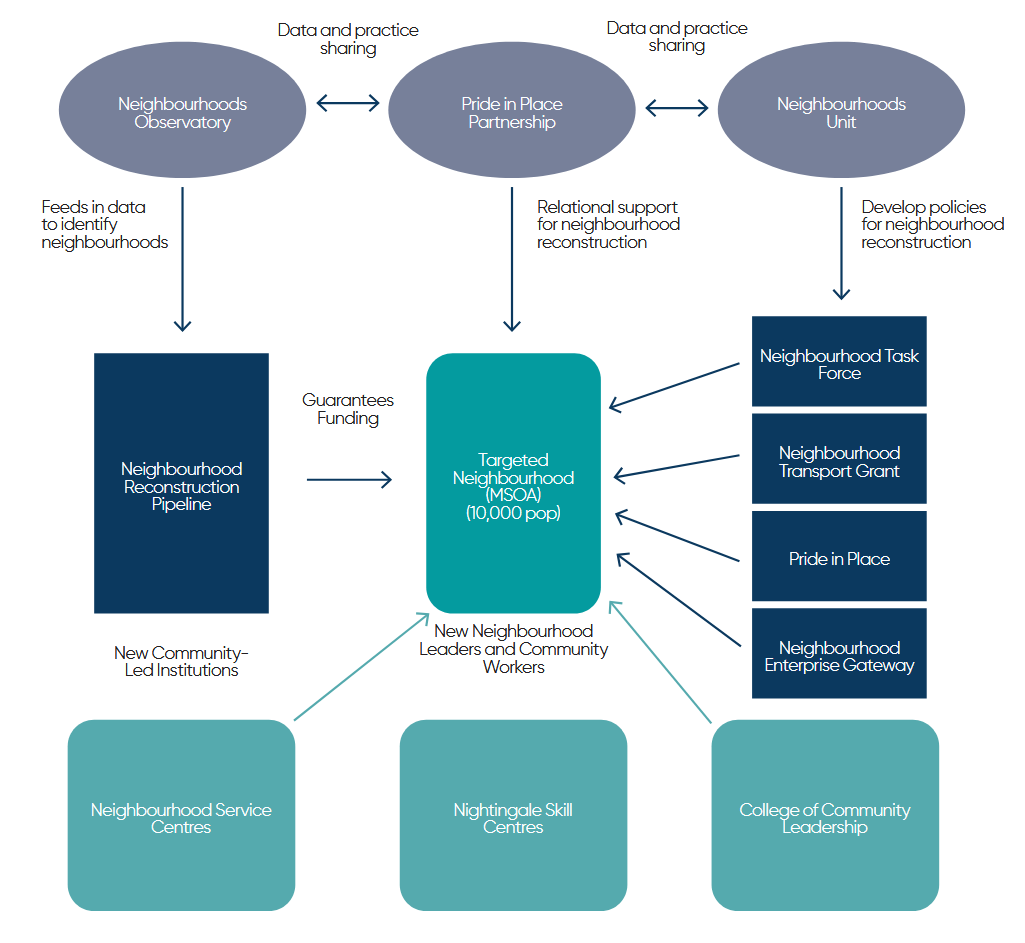
Here, Simon Duffy reflects on the journey away from the institution. In the ICON report, new institutions are proposed to produce statistics and train people in community leadership. Does a tendency towards instituting and standardising processes risk failing to recognise the gifts and knowledge already present in communities? |
|
|
|
|
The ICON system for neighbourhood recovery |
Principles of working with communities |
|
1. Communicate Effectively, Effectively Communicate. 2. Don't do things to people or for people, do things with people. 3. Get up, show up, never give up. |
|
Glyn Butcher of People’s Focussed Group Doncaster here gives principles for working effectively with communities. The ICON report rightly notes that time is needed to forge relationships of trust that underpin working with communities. However, the report also shows the neighbourhood as a focus of the system rather than in a relationship of equal exchange. Does 'doing with' imply arrows of action and activity should always be two-way? |
|
|
The ideal community-led institution? |
|
"Town and parish councils can be the democratic voice and mechanism for delivery of action from communities, being the hand that reaches up to grasp that which is reaching down from the ‘meso’ level of unitary and strategic authorities. As place-based convenors of action, they can support the voluntary and democratic lifeblood of our places.” |
|
The ICON report makes clear that communities need to be leading regeneration through new social infrastructure, co-operatives and social enterprises. However, what form these might take is not clear. A new paper by myself with co-authors Amy Burnett and Dan Ozarow from Middlesex University, published through LPIP, argues for the role of parish councils as institutions led by and shaped by the community. If the necessary changes and investment is made to support them to work well everywhere, could parish councils be a key platform for change in our places? |
|
|
|
Next Monday, February 2nd, from 11:30am to 1pm we'll be having another #DoWith neighbourhoods meetup over lunchtime (eating sandwiches on-screen is allowed!) We're meeting on Google Meet. In this session we'll be talking about what's happening in our neighbourhoods, making connections, sharing experiences and knowledge. All welcome. Best wishes, Jason
Jason Leman |
|
|
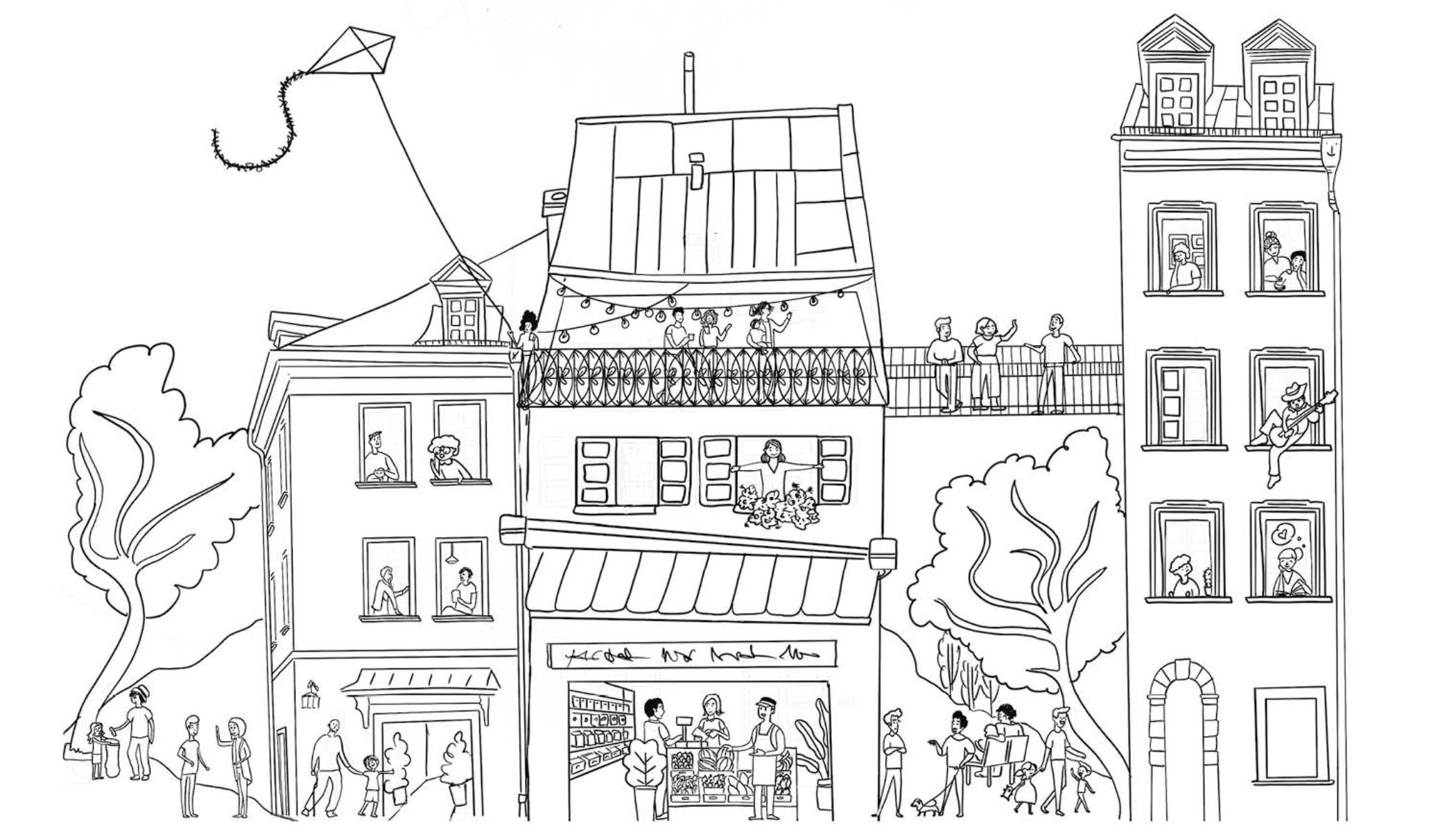
Thanks to Ester Ortega for the wonderful illustration. |