An update from the Neighbourhood Democracy Network oriented around experiences of poverty.
News | 16.11.26
Jason Leman shares the latest updates in our Neighbourhood Democracy Newsletter.
Sign up here to receive this regular newsletter by email.
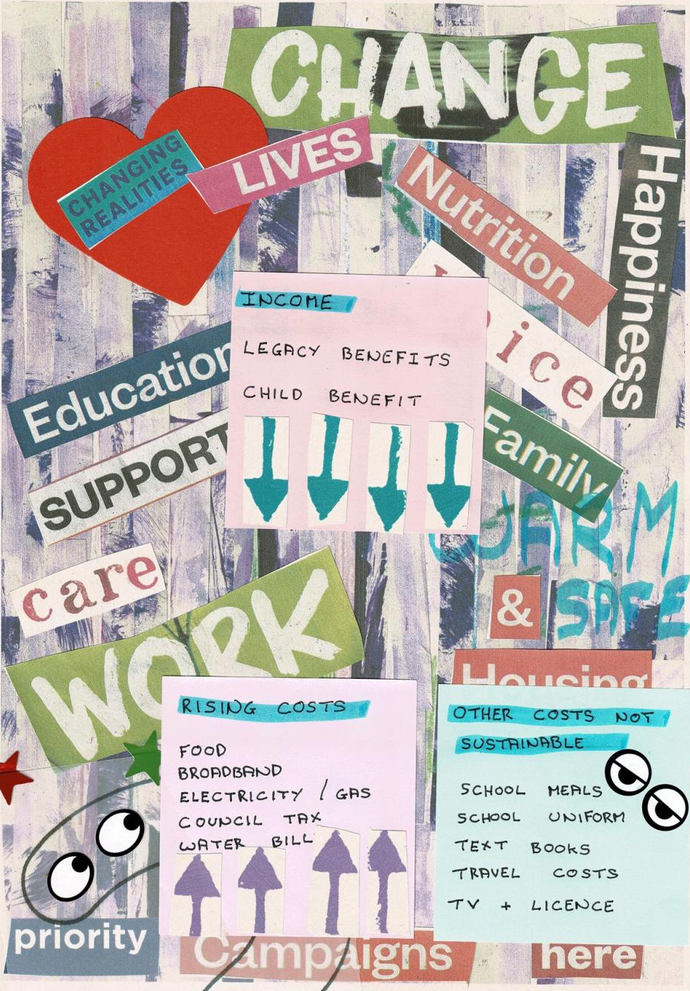
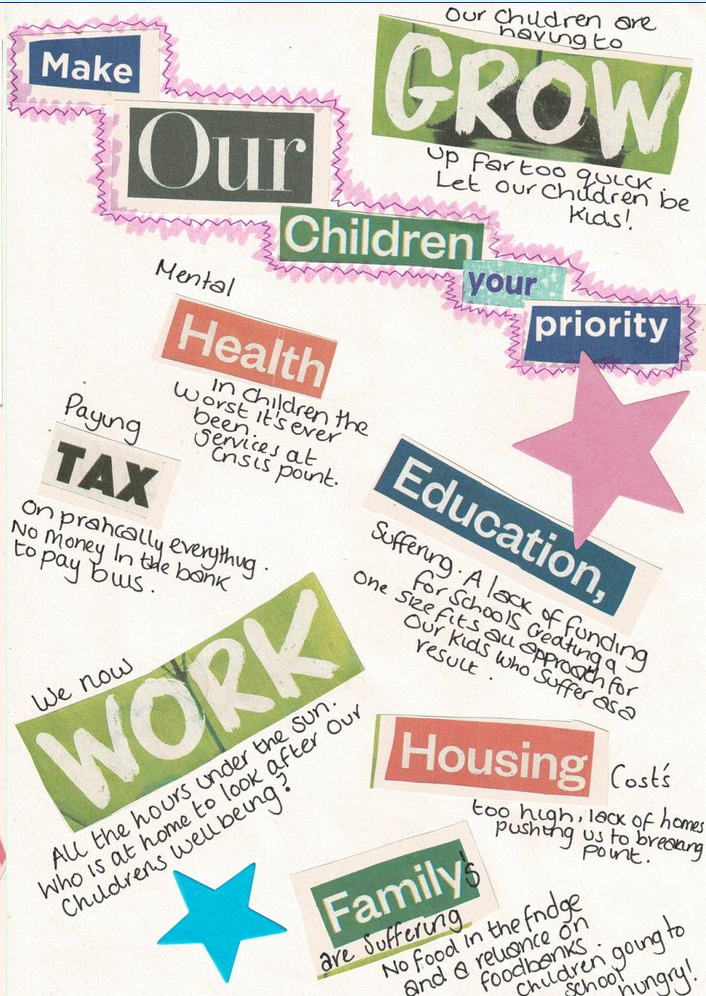
This month’s update from the Neighbourhood Democracy Network is oriented around experiences of poverty and viewpoints on it. It includes reflection on two books by authors who grew up in poverty. Also featured are poems and images from the ‘Changing Realities’ project on mental health.
The news on the budget statement had some hopeful highlights - more place-based preventative spending, removing standing energy charges, a tapering of the carers allowance and protecting low-income pensioners. There were modest positive changes and no harmful cuts. This is in a context of broader positive action on poverty, such as removing the two-child benefit cap and the collaborative child poverty strategy. However, there is still a huge gap between these modest ambitions and the fierce struggle to survive.
|
|
|
A view from inside poverty |
|
|
“Much of the work carried out in deprived communities is as much about the aims and objectives of the organisations facilitating it as it is about local needs. And notably, the aim is rarely to encourage self-sufficiency” - Darren McGarvey
“Are we tough enough to look ourselves in the mirror and admit that our conduct harms children? Public policy can help, but there is no government that can fix these problems for us” - J. D. Vance |
|
This newsletter reflects on two influential books giving a viewpoint from and on poverty. “Poverty Safari”, by Scottish rapper turned social commentator Darren McGarvey, alongside “Hillbilly Elegy”, by hillbilly marine turned U.S. vice president J. D. Vance. Both authors had childhoods scarred by violence. Both had mothers who struggled with mental health and drug addiction. Both had people in their lives who gave them a chance at getting out of a spiral of self-destruction. Their reflections are brave, complex, painful, with bright moments of tenderness and humour. Both authors are clear that poverty has immediate and life-long impacts. Both argue that this does not take away personal and communal responsibility to change. |
|
|
The blame game |
|
“My answer to every instance in which I lacked power was to demand that someone else intervene on my behalf”- Darren McGarvey “I began to understand that I was seeing the inner workings of a system that lay hidden to most of my kind” - J.D. Vance |
|
McGarvey and Vance talk about how organisations and others view communities in poverty. We might, maybe crudely, describe this in two ways. The first blames the system - “you have little to do with your own rescue and your helplessness is someone else’s fault”. This can result in a spiral of dependency and doesn’t encourage us to care for ourselves or see our own potential. John Bird of the Big Issue talks about the issue of dependency in the Government focus on helping people cope but not offering a cure or focusing on prevention. The second blames people in poverty - “you are worthless if you can’t do this on your own and you should be ashamed if you can’t”. This can result in a spiral of failure and doesn’t help us understand the historical and structural barriers that prevent us from gaining a different life. Half of people in invisible poverty feel shame about struggling to get by, even if they have no options open to them. The current debate about benefits seems to be tending to an either-or question about helping people cope or helping people change their situation. But it’s not either-or. Vance and McGarvey sometimes needed direct support, sometimes needed a challenge to do better with their lives, sometimes needed help navigating the alien world outside their immediate circumstances. This suggests a social support system designed and practiced as an equal relationship rather than provider and recipient. We know that such relational support is best provided at the scale of communities and neighbourhoods. Where people can walk alongside each other to share both needs and gifts. |
|
|
|
The Resilient Voice of a Struggling migrant Single mother Pieces of hope held tightly in tired hands, Often stretched thin across endless days. Voices whisper dreams they fear to speak aloud, Even as their hearts refuse to give in. Resilience rises where resources fall short, Turning struggle into strength, pain into purpose. Yearning for a tomorrow that finally feels fair. - Elizabeth Ugwuanyi (Changing Realities) |
|
|
|
Where we are |
|
“How odd that in the social pressure cooker of a deprived community, characterised by chronic stress and low educational attainment, something as simple and vital as a quiet place to be with your thoughts has become such an unreasonable expectation” - Darren McGarvey “The peace of Mawmaw’s home gave me a space to do my homework … the absence of fighting and instability let me focus on school and my job … spending all of my time in the same house with the same person made it easier for me to form lasting friendships” - J.D. Vance |
|
McGarvey and Vance talk about the stress and fear that is entangled with poverty and the need for spaces that allow for safety and care. This can sometimes be provided by family. This can sometimes be provided by community groups and safe spaces. Recent research by the Joseph Rowntree Foundation has highlighted the extent to which social infrastructure is less present in the most disadvantaged neighbourhoods, with falling numbers of community workers and comparatively worse rates of community spaces closing. The JRF argue that such infrastructure needs to be supported as being:
Neighbourhood infrastructure is critical to providing space away from poverty alongside growing the social and economic wealth in a place. The still unravelling impact of austerity, reduced funding, and increasing costs are not being countered. |
|
|
|
a Golden Shovel More than a decade of austerity is it not surely enough is enough how much longer can we bear it for I’ve run out of essentials and the burden of making ends meet, as evasive as a good night’s sleep for the troubles we bear come at a cost for all the worry of a life worth living crisis takes its toll. Poverty bites. - Beverly W (Changing Realities) |
|
|
Owning our future |
|
Both McGarvey and Vance talk of places ignored and overridden by state, businesses, and charities. Places consumed by hopelessness and rage. Ever diminishing confidence that things will change is coupled with a resentful anger that emerges in (self)destructive ways. With increasing costs and instability, more and more people are just one step away from poverty. We know that this does not just have immediate struggle but causes generational harms. A future budget might support the neighbourhood infrastructure, services and opportunities that would open up routes away from poverty for everyone. For now, this budget will likely be a slight shift in the scenery of everyday life. McGarvey and Vance, as two young white men growing up in poverty, have some strikingly similar viewpoints in their books but their paths have diverged. For Vance, a fervent faith and patriotism seem to have won over the kindness and self-reflection that also runs through Hillbilly Elegy. For McGarvey, he has continued a self-critical arc of comment and reflection on class and society. His latest series, exploring public services in modern Britain, is available on iPlayer. To see more from parents group Changing Realities, go to www.changingrealities.org/ |
|
|
|
|
|
|
Hope your week goes well. Any feedback, ideas, or news to share then please get in touch. Best wishes, Jason Jason Leman |
|
|
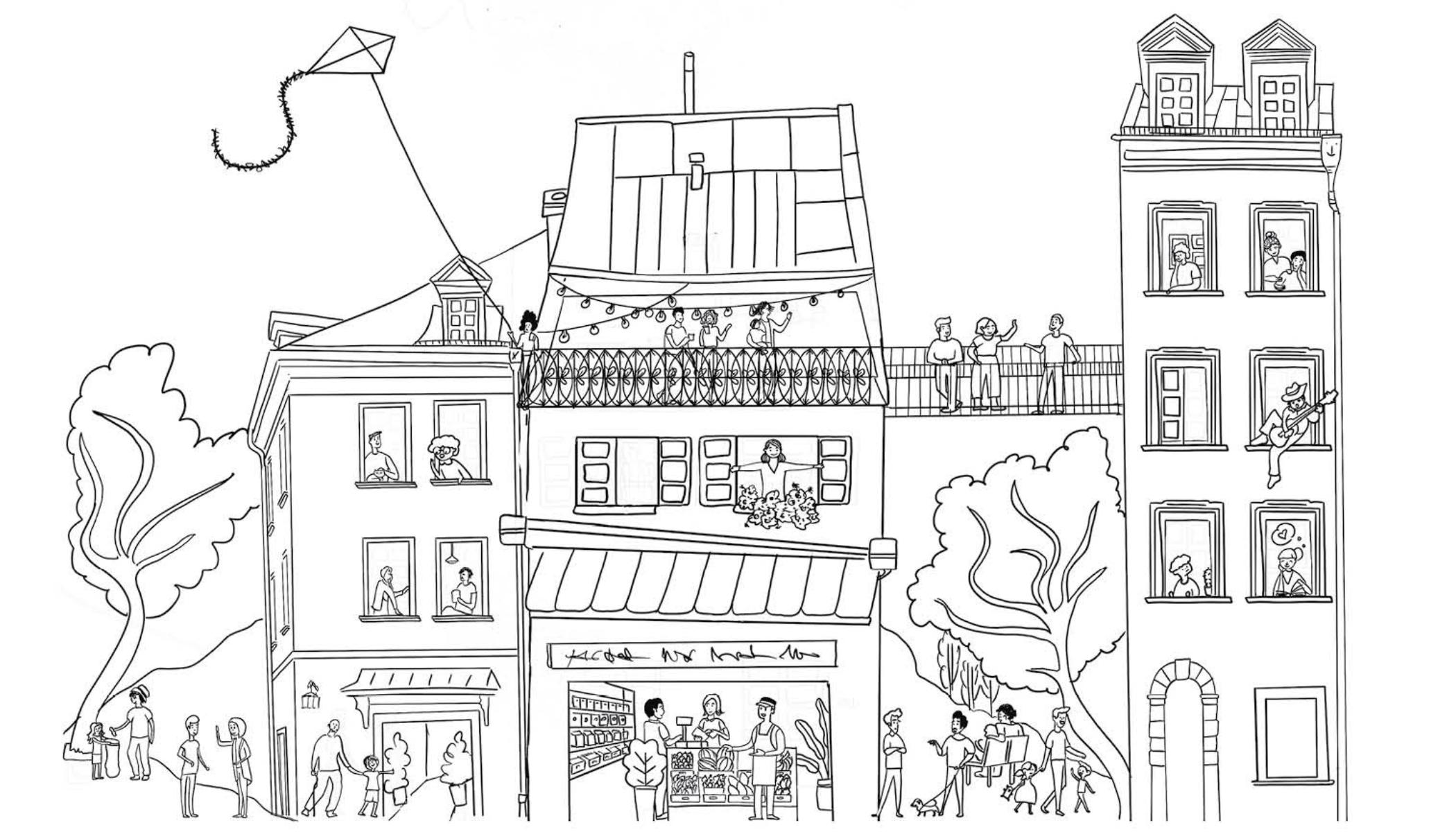
Thanks to Ester Ortega for the wonderful illustration. |