Jason Leman shares the latest updates in our Neighbourhood Democracy Newsletter.
Sign up here to receive this regular newsletter by email.
What our places look like shape our view of them. What is built or what remains as a pipe-dream. The power we have over this process shapes how we view ourselves. Are we just living in a place shaped and provided by others, or is our place something we have rights and responsibilities over? That’s the topic of this month's email, with an English background, but thinking of neighbourhoods everywhere.
For more on planning, neighbourhood democracy, and all things related, join us at the Neighbourhood Democracy Movement drop-in chat, online with Google Meet, Thursday 24th September at 12 midday till 1pm (add to Google calendar). We’ll have an overall chat along with smaller breakouts to swap ideas and experience. All welcome :)
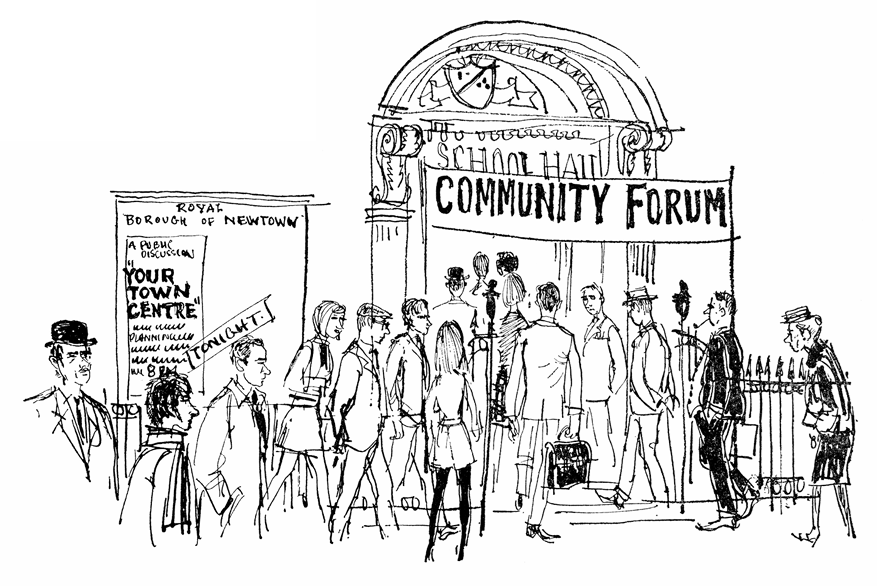
Illustration by David Knight, from the Skeffington Report (1968), copyright HMSO 1969.
|
Post-war planning in England - what was built where and how - was an exclusive process that ignored ordinary citizens. As time went on, there was increasing demands for people to have a voice. In 1968 a new planning act gave people a right to know what was being planned in their area and to say what they thought. Alongside this was published the Skeffington Report, which discussed what real public participation in planning would look like.
|
"The evolution of the structures of representative government, which has concerned western nations for the last century-and-a-half, is now entering a new phase … planning is a prime example of the need for this participation for it affects everyone … people should be able to say what kind of community they want and how it should develop"
|
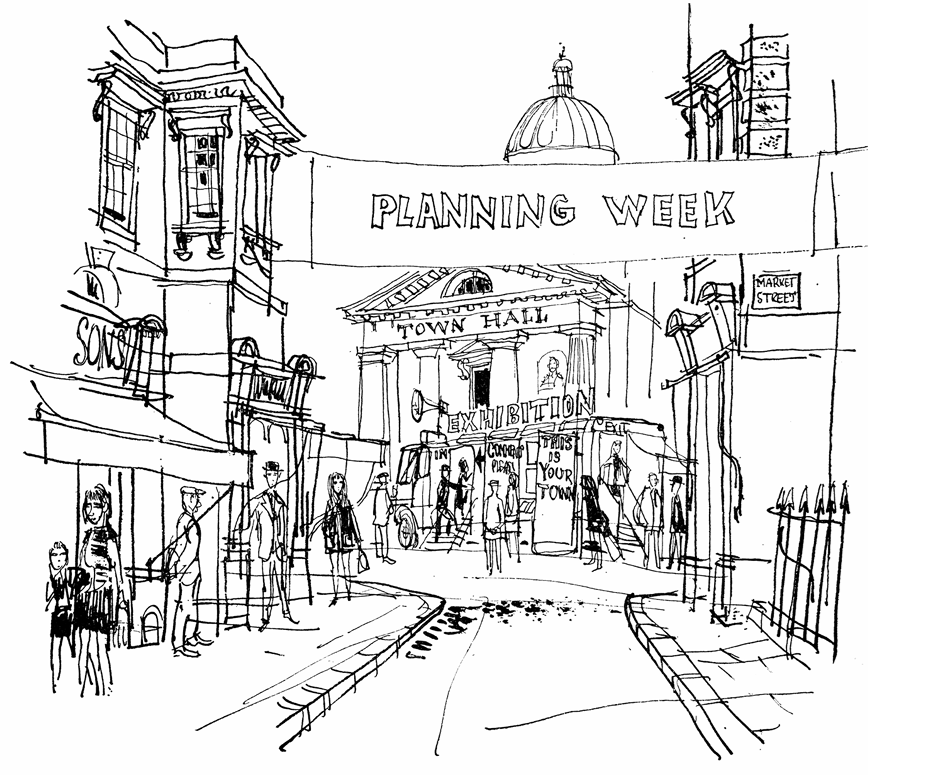
The Skeffington report gives some striking examples of public participation. In 1961 Coventry, public discussion in the council’s development plan included surveys, public meetings in every council ward, discussion meetings arranged by local groups, exhibitions, participation of local schools and new voters, and involvement of the press. The participation was valued, even if the impacts on the plan were relatively light. Even today, examples like this feel ambitious.
|
In the decades since Skeffington, the emphasis on who has power in planning has shifted between regional strategic planning, favoured by Labour, and a more hands-off approach of planning in the localities, favoured by the Conservatives. There has been little time for the system to settle and learn what works. The innovation of Neighbourhood Development Plans in England has potential to underpin local place-making (similar “Place Plans” in Wales and “Local Place Plans” in Scotland have since been introduced). These have some statutory weight behind them but their impact is limited.
|
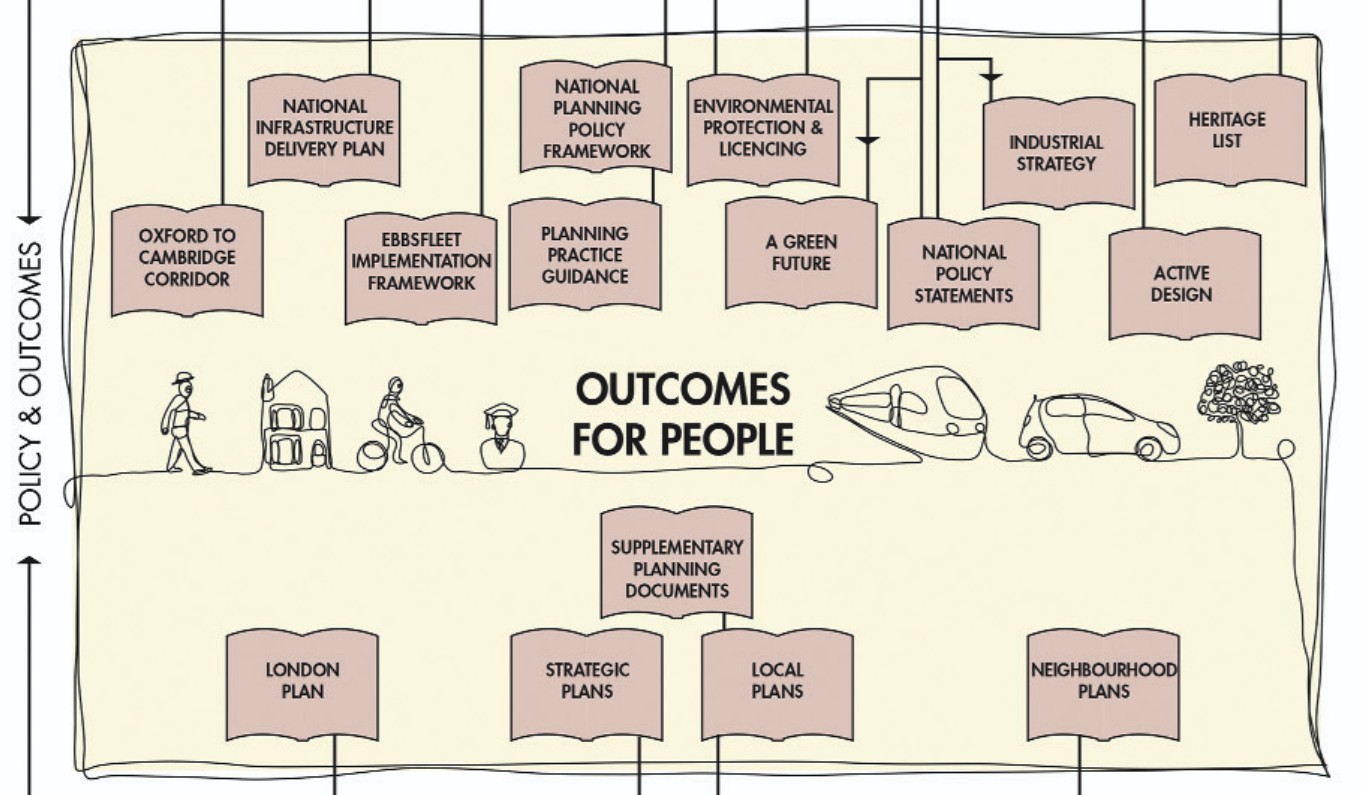
National planning priorities and planning inspectors continue to trump local control. Large developers have a lot of resources to push through their plans. Some councils have community development to stimulate and support local discussion (a key recommendation of the Skeffington report) but this is dependent on fair political and financial winds. For ordinary people, planning is typically an indecipherable and impenetrable code.
|
The battle over where we live
|
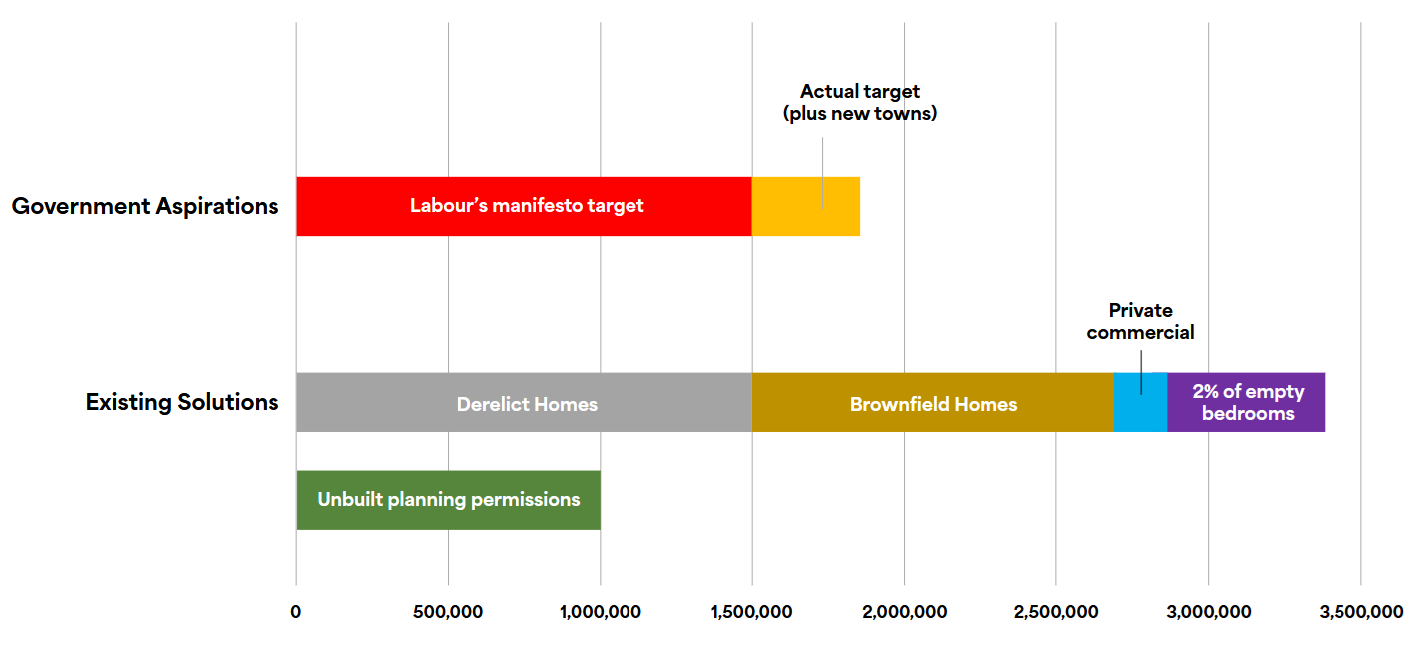
The Homes for Everyone campaign argues that current government housing targets could be more than met through using empty homes and properties, pushing developers to progress housing already given permission, and encouraging the rent of spare rooms, before any more development is even needed.
|
Much of the current conflict over local development is due to national house-building targets, which have been argued to be damaging and misguided. With an under-resourced and under-pressure system, England risks planning being dictated by elite decisions and without a post-war deference to authority. It is a recipe for the same conflict that led to the Skeffington report in the first place.
|
Neighbourhood planning v2.0
|
At the same time as planning shifts upwards and outwards, neighbourhoods are an increasing focus of Government policy. This offers an opportunity to think about what neighbourhood planning could be. A discussion of community-led planning in 2020 put forward three main proposals:
|
“First, through moving beyond a focus on getting voices heard and a seat at the table, to securing power through direct ownership of and access to land, assets and resources. Secondly, by moving from responding to proposals to people putting their own plans forward. Thirdly, … participation should be more than ticking a box to say that democracy has been put into (limited) effect, and that one of its purposes should be to (re)assert the social purposes of planning”
|
Planning for the people and their neighbourhoods can happen but, as has been the case since Skeffington, it relies on political will.
|
For more on planning, neighbourhood democracy, and all things related, join us at the Neighbourhood Democracy Movement drop-in chat, Thursday 24th September at 12 midday till 1pm online with Google Meet. We’ll have an overall chat along with smaller breakout chats to swap ideas and experience.
Hope your week goes well, best wishes,
Jason
Jason Leman
Citizen Network - Neighbourhood Democracy Lead
|
Illustration by David Knight, from the Skeffington Report (1968), copyright HMSO 1969. |